Category Archives: Uncategorized

How to use Teams Video Conferencing

When you are joining a “Teams” meeting you will get an email with a link to the meeting looking something like this:

Teams Email

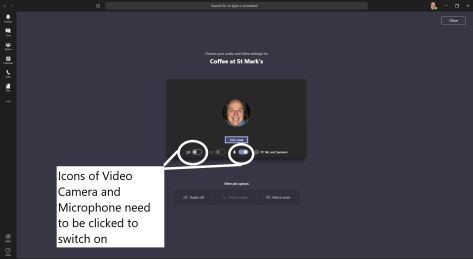
You should click on the link to the Teams Meeting and then the screen at the top of the page will appear in your browser.

You have a choice as to which of the three options you should take; unless you have a badshotleaandhale.org email address the bottom one is ruled out.  You can then continue to use your browser (the top option, and easiest) or download the Windows application.  This will take a little longer, but will then perform better (they say).

Sign in annotated

Once you have done this, you will be prompted to type your name and “Join as a Guest”, which you click on, and then to “Join Now” – click on that button.  You may be prompted to allow your microphone and video to transmit.

At the end of the meeting, hover your mouse over the picture and click the red telephone to leave.

Sign out annotated

If you are using a phone then you need to download the Microsoft Teams App from the appropriate store.  This will work similarly, but slightly differently!

Using Zoom

We will be using Zoom for some meetings over the coming weeks, and whilst you don’t have to do much to use it there are somethings that you have to do, so here are the instructions.

Windows Computers

  1. You will receive an email with a link to the meeting, which you should click on.  It will look like this:
    https://us04web.zoom.us/j/444644926?pwd=TDBMeXdveXRINktNZlBCbE8yR2Vsdz09
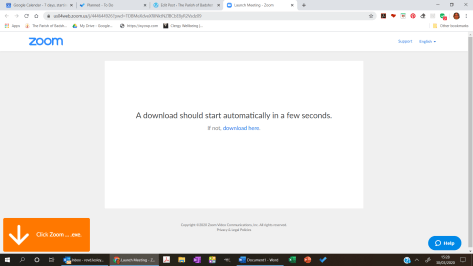
  2. The first time that you do this you will be prompted to download some software, which will probably start automatically
  3. Screen
  4. You should then run this to install the software to receive the meeting
  5. You will be asked if you want to allow Zoom to install the software – this screen may not appear on top of other things on your computer but will appear at the bottom of the screen as a yellow and blue shield.  Switch to that message and allow it to update your computer.
  6. Then it will prompt you for your screen name, which is what people will see you being called.

You only have to do all this the first time.

Smart Phones

You will need to install an app from one of the stores before clicking on the link – probably called Zoom Cloud Meetings!

Some of the Sermon on the Mount!

This Sunday in church we are reading Matthew 5:13-20.  Here are some thoughts which will form the basis of my sermon.

I am particularly interested in vv17-20.  There seems to be some form of contradiction in these verses.  Jesus tells us that he has not come to abolish the law, and seems to make dire threats against those who teach otherwise.  And yet Peter abolishes kosher law (Acts 10:9-23) and Paul argues that following the law is a problem (Galatians 5:4-6).

There are some logical solutions to this!

“For truly I tell you, until heaven and earth pass away, not one letter, not one stroke of a letter, will pass from the law until all is accomplished”… If Jesus incarnation, death and/or resurrection have caused heaven and earth to pass away, or if they have caused all to be accomplished…

What “law” is Jesus talking about?  Traditionally “law or the prophets” refer to the first five books of the Hebrew Bible, and the prophets writings.  However, this includes Leviticus which contains the kosher laws.  If we look at the vv that follow this weeks reading then we may see that they are a commentary on the 10 commandments.  Or on the commandments which Jesus is about to give – where he interprets the 10 commandments in a harder, but more loving way.

Alternatively we might see the law as Jesus expounds it in Matthew 22:34-40 as fulfilling the law and yet at the same time as undermining the “law” as taught by the Pharisees which created additional laws, just to be on the safe side!  God’s laws were broad principles.  Jewish laws defined the principles in fine detail.  After all the passage ends: On these two commandments hang all the law and the prophets.”

Another approach is to look at who Matthew is writing for – which is the Jews.  If you are writing to the Jews, it would be sensible to emphasise the continuity with Judaism with its emphasis on the Law and Prophets – Jesus is not doing anything that does away with the Law and the Prophets – even though later disciples do.

Why this questioning?  Personally I find a conflict between the Two Great Commandments and some of the others (I am not arguing for us to ignore the 10 commandments – perhaps even to extend them to not coveting our neighbours husband!).

A couple of the commentaries I read say that this is the hardest passage if scripture to interpret (trust me to pick it!).

If this passage worries you, what you have to do is figure it out for yourself – although you can also accept that you can’t make sense of it.

It’s Christmas!

Have you exceeded the speed limit?

Have you cycled on the pavement?

Have you ever knocked on someones door and run away?

Have you activated your burglar alarm without nominating a key holder who can turn it off in your absence?

Have you sung happy birthday to a friend in public without a copyright license?

All of the above are against the law.  Congratulations if you have answered no to all of them!  But…

Have you driven a car before 1976 without a bale of hay?

Are you a man born before 1943?  Did you keep up your longbow practice?

That is the problem with the law – there are so many, including the ones you don’t know about that it is impossible to keep them all.

So what has this got to do with Christmas?  What we are celebrating is the coming of God to earth, but more than that, we are celebrating a whole new way of being right with God.

Lots of religions, and I only haven’t said all except Christianity because I don’t know about all of them, believe that you get right with God by doing the right things, by keeping the “law”.  This was certainly the case with 1st Century Jews who not only had the 10 commandments, but the 613 laws of Moses and others that the pharisees had created to ensure that none of the others were broken – except it wasn’t possible to keep all the laws.

Jesus was born to bring Good News to the world – the good news being that it wasn’t keeping the law that made us right with God.  Instead God loves all of us – whatever we have done – being right with God depends on God – not us.  If you look at the Bible – the only people that Jesus has no time for are those who tell everyone that you have to behave – having created laws which people find impossible to keep, and which they cannot keep themselves, despite perhaps appearing to do so.

Now at this point you might well point me towards a lot of those Christians you hear on the radio telling you about the all the “laws” that you have to keep.  All I can say is that I fundamentally disagree with them.  Unfortunately the press like conflict and the extremes of the Church of England get more press time than the centre.  This parish and the three churches in it are members of Inclusive Church, an organisation whose vision is, in part:

We believe in inclusive Church – a church which celebrates and affirms every person and does not discriminate. We will continue to challenge the church where it continues to discriminate against people on grounds of disability, economic power, ethnicity, gender, gender identity, learning disability, mental health, neurodiversity, or sexuality.

God is not a God who is watching over you, trying to catch you doing something you shouldn’t – adding up the pluses and minuses like some Santa figure trying to figure out if you are “naughty or nice”.  God is a God who wants us all to have life in all its fullness – to live this life in a way that is fulfilling and life giving.  That is the Good News that Jesus was born to bring to us – isn’t that something worth celebrating?

However, this isn’t some excuse for us all to do whatever we want.  If God wants us all to have life in all its fullness then we cannot enjoy our life in such a way that others ability to enjoy theirs is impacted.  If we insist on overheating the planet because we want our creature comforts, then others homes get flooded; if we want to pay less in taxes then those without the ability to earn sufficient to live will suffer; if we refuse to look after refugees, and others less well off than ourselves, then what for their life in all its fullness?  The Jewish scriptures, based on law, defend the rights of the widow the alien and the orphan – how can we basking in God’s love do less?

Of course, if you believe in a God who is trying to catch you out then you will find that a different set of priorities are necessary and you might start telling people how they should behave to be right with God.

No wonder Jesus birth is seen as Good News – now we can all live the lives that he calls us to – lives that allow us and everyone else to enjoy life in all its fullness.  No wonder we are celebrating the incarnation – God with us.  If you aren’t already part of it I invite you to join this journey of faith and to share in the Good News.

Calendar meals – or how to raise money and irritate a teenager

You’ve heard of Calendar Girls? Well meet Calendar Meals. There’s a new charity calendar around raising money for the Parish of Badshot Lea and Hale and the charity Lupus UK, with each month showing a meal lovingly prepared by a mother for her son, and made into a picture – a face, an animal, a flower.

A sweet idea to encourage a child to eat you might think. No, because the child in question is 16 and rolls his eyes every time his mother dishes up a bit of food art, knowing full well that his she is winding him up and will post a picture of the latest meal on Facebook where it will garner admiring comments.

“You should make a calendar out of these”, was one comment. “Challenge accepted” came the reply and now, as Christmas approaches, the mother, Stella Wiseman, is selling the calendars to make some money for the parish and for Lupus UK. Her son, Robbie Eggleton, continues to roll his eyes.

Stella says: “All the profits are going to the parish and to Lupus UK, a charity which supports people living with Lupus, an incurable autoimmune disease which causes the immune system to produce too many antibodies. My best friend has it and anything that can help support her and teach more people about the disease has got to be good. I’d also like to raise money for the parish to support the work we do in the community.

“Another added benefit is that the calendar simultaneously makes people laugh and the longsuffering Robbie roll his eyes.”

There are two sizes of calendar – 16 x 21cm and 21 x 28cm and they sell for £13 and £15 respectively, including postage and packaging.

So if you fancy eccentric food art to brighten up 2020 and want to support two worthy causes, email admin@badshotleaandhale.org or call 07842 761919 and let us know what size you would like.

Here’s a taster:


Prayer – what is the point?

Yesterday we came across a blog post by Jonathan Clatworthy who writes on God, philosophy, theology and ethics, and it was so useful we wanted to share it. You can find the original here at

but to save you the effort of clicking, here it is below (but do click on his website; there are plenty of other great posts too).

Is there any point in praying?

I actually believe in praying, but not for the reasons many people give. The Christian tradition offers different, and often conflicting, accounts of how to do it and what to expect from it.

This post offers my way of trying to make sense of it.

Can it ‘work’?

At its most basic, praying is what people do when they are desperate. At the beginning of the Second World War, everybody prayed. Even atheists prayed. If there is anyone up there, please please please!

To ask whether it works is to look for evidence. Some researchers ask people what they prayed for and whether it happened. These studies can produce interesting results, but they don’t prove anything.

Others say the opposite: praying can’t work because it’s mumbo-jumbo. Superstition. Unscientific. This is equally unprovable. It’s an echo of that nineteenth-century fantasy that scientists were going to find out everything about everything. If they did, it would follow that anything scientists couldn’t establish doesn’t exist. It’s over a century since scientists believed this. What they have shown is that the universe is far more complex than the human mind can understand. We’ve increased what we know, but what we don’t know has increased much faster. For all we know there may be any number of processes that our thoughts and prayers may trigger. We can’t prove anything, and perhaps that’s just as well.

In any case asking whether prayer ‘works’ is only looking at prayer at its most basic. It’s the prayer of the self-centred, knowing what they want. When we are self-centred, we can still pray. We can start with what we want, and ask God to let us have it. Sometimes we get what we want, even if we would have been better advised to want something different.

Relating to reality

Prayer is about relating to the wider reality, the big context of our lives. Christians call it ‘God’. For some people the word ‘God’ conjures up unhelpful images, but we are all aware that we live our lives in the context of a reality that is mostly way beyond our understanding.

Within the Bible and the Christian tradition, let alone outside it, people have imagined God in very different ways. For example, if we think of God as someone who punishes sinners, our praying will be about pleasing God so that we don’t get punished. If we think of God as a fighter attacking enemies, our praying will be about being on God’s side against the enemies.

In these cases our praying will really still be self-centred, wanting to be on the right side of God. These are examples of unhelpful images.

Prayer becomes more constructive when we adopt more constructive images – when we trust that the forces maintaining the universe, whether or not we call them ‘God’, are well-disposed towards us and want the best for us. This is the basis on which most faith traditions encourage forms of prayer that help us let go of our self-centredness. The aim is to reflect on the ‘big picture’ so as to expand our range of concerns beyond our individual selves, towards a ‘God’s-eye-view’ of reality.

Gratitude

From this perspective, prayer naturally begins with celebrating what we have received. A classic biblical way of putting it is that God has designed us to bless us, so that we flourish. God wants us to live fulfilled and happy lives, and wants everybody else to as well.

An easy way in to praying is to offer thanks for what we have got. Many people say grace at meal times. When you give birth to a baby, you feel thankful. At a funeral of a friend you feel thankful for that person’s life. Some people develop the practice of saying a quick ‘thank you’ to God through the day, whenever something happens that they are glad of. It means that, instead of focusing on what we haven’t got, we focus on what we already have, and express appreciation.

General intercession

There is also a lot that goes wrong. Humans can work towards the common good, but by nature we are also self-centred. We have been given freedom, if we so choose, to only care for ourselves at the expense of other people, or only care for our family at the expense of other families, or only care for our country at the expense of other countries, or only care for humanity at the expense of the environment.

So when we pray about the Amazon rain forest being burnt, or refugees looking for somewhere to live, we can take for granted our own point of view; but we can instead reflect on what God’s point of view might be like.

When we take for granted our own point of view, we can easily imagine we know what God should do. It’s as though we are treating God like a washing machine that doesn’t always work. We know what ought to happen: why doesn’t it? It’s as though we’ve got the intelligence and God has got the power.

Actually it’s the other way round: God has the intelligence and knows what needs to be done, but has given power away to us humans. So when things go wrong God could put aside the laws of nature, blitz the world and put things back the way they were. But that would mean taking away the freedom we have been given for our own good.

However much we might wish God intervened for us, we never see the whole picture. When we try to see it from God’s point of view, we ask ourselves: what would God want? Can we help?

Intercession for ourselves

When we’ve been personally hurt by other people – say, we’ve been injured by someone driving dangerously, or we’ve been sacked from work and have no money – our first thought might be to pray for God to put right what has gone wrong. We might want God to punish the other person.

When people hurt us, we naturally resent it. To pray well, we can spend time noticing our resentment, noticing that our resentment hurts us and doesn’t do any good, and allowing ourselves to distance ourselves from our negative feelings. We may not be able to put right what went wrong, but we can gradually practise the art of detaching ourselves from the feelings that distress us. It’s hard, but it can relieve us of emotional burdens.

So one aspect of praying is to allow time for God to show us what we would want if we saw the world through God’s eyes – inviting God to guide us in our wanting.

Confession

Just as other people hurt us, we also hurt others. We all mess up sometimes. Another part of praying is facing up to the faults in ourselves.

There is no point in just feeling guilty and miserable. The point is to be practical. We can change our own actions more easily than we can change anyone else’s. Our praying can reflect on what we can do about it. Sometimes we can put right something we’ve made a mess of, or give someone an apology. Sometimes it’s more a matter of recognising a habit in ourselves that we need to practise getting out of.

Adoration

Many mystics tell us that prayer at its best goes beyond all these, and lets go of all every agenda to just spend time with God. It’s a bit like spending time with someone you love deeply. You may talk to each other, but what you say is less important than just being with them.

Personally, I’m no good at it. In fact I’m no good at praying at all. But I can see the point. At its best, praying helps us expand our awareness away from the individual self-centredness that comes so easily, towards a God’s-eye-view and the common good.

Collection for refugees

The next collection of clothes, toiletries and other items by the local group Farnham Help for Refugees will take place at St Thomas-on-The Bourne church on Friday, October 4, from 3-7pm.

With winter approaching. the plight of those forced to leave their homes and find refuge in other countries becomes even more serious than it has been. Many arrive in foreign lands with few clothes and possessions and must rely on other people for basics which most of us take for granted – shelter, food, clothes, medicine, toiletries and so on.

Farnham Help for Refugees was set up by a small group of people in response to the dire needs of refugees, both those arriving to this country and those elsewhere in Europe and in the Middle East, and holds regular collections. They work with agencies supporting refugees directly so that they can ensure that they are asking for exactly what is needed.

Here is a list of what is needed at the moment:

Clothing
Warm coats for men, women and children
Adult jumpers, fleeces and hoodies (s,m,l)
Adult jeans, joggers, leggings (s,m,l)
Adult t-shirts (s,m,l)
Children’s winter clothes
Adult and children’s underwear (new only)
Thermal socks (new only)
Hats, scarves and gloves
Bras (new or as new)
Maternity wear

(Please note, all items should be new or as-new and clean please. No dirty or damaged items. No XL or XXL items. No shoes, trainers or boots. No duvets).

Other items
Sleeping bags

Baby items (all items must be unopened)
Nappies (disposable only)
Wipes and nappy cream
Vaseline and Sudocrem

Toiletries (all items must be unopened)
Shampoo
Razors (disposable only)
Toothbrushes and toothpaste
Soap and body wash
Roll-on deodorant
Wet wipes
Incontinence pants/pads
Sanitary towels (not tampons)
Washing powder and cleaning products

As it costs £6 per box to send the items, Farnham Help for Refugees welcomes cash donations on the day to help with shipping costs.

Please do not donate items not on the list as they will have to be recycled locally and cannot be sent to refugees.

Contact Farnham Help for Refugees by emailing farnhamhelpforrefugees@gmail.com  or via facebook: @farnhamhelpforrefugees

Picture by jeyeonwon from Pixabay

Caravan Jazz Videos

Did you miss the opportunity to see the Caravan Jazz event on May 4th, when Wendy Edwards and the Teddy’s Café Bar Jazzmen played music and told stories from the life of Ted and Jean Parratt, Wendy’s parents?  Fear not, it can be seen by clicking the below links, videos thanks to Seamus Flanagan. The evening raised money for the Kitty Milroy murals, at St Mark’s Church, Upper Hale:

Part 1

Part 2

Featured are Michael Atkinson R.I.P. bass guitar/ukelele, Kendall Gordon – keyboard, Hugh Lister- clarinet, David Mason-trumpet, Geoff Rideout-guitar, Roger Sinclair- keyboard, Wendy Edwards- vocals, Melissa Heathcote-vocals, Mike Twiddy-vocals and Frances Whewell-piano

If you would like to donate to the Murals fund then please click on the icon below.

Consecration of St John’s, Hale

In this 175th anniversary year many new and interesting documents telling the story of St John’s have been found. Below is a press cutting, thanks to Bob Skinner, telling of the consecration of St John’s on 8th November, 1844:

18441116 Hampshire Advertiser p. 4 Consecration of St Johns Church 8 Nov 1844.

In addition, our church architect has found some plans. Below is the original plan of the church and then the plan of the extended church in 1897 (you can read the appeal for fundraising for the extension here):

1842 to 44 Original Plan1861 Extension Plan

There was a dedication service at St John’s, after the extension and thanks again to Bob Skinner, the cutting is here (it is difficult to read so I have also typed out the words):

Surrey Advertiser 24 February 1897 p7

The chancel of the parish church of St. John, which has been enlarged and improved as a jubilee thankoffering was re-opened by the Bishop of Winchester at a special service on Saturday afternoon. The work was commenced in November 1894, and completed at the end of last month. The chancel has been extended towards the nave, and an iron screen on a low kerb wall has been placed at the entrance. Permanent choir seats and clergy desks have been provided in oak in the increased space, and the pulpit and lectern have been removed to the nave. The renovation in the chancel also consists of a mosaic reredos. The new transept has been erected over the tomb of Bishop Sumner, who was interred with his wife on the south side of the chancel in 1874. The organ has been placed in the transept, the opening to which on the east side is near the altar rails. The super-altar was on Saturday adorned with vases of white flowers. A very large congregation had assembled for the dedication. The service was opened with the singing by the choir of the 84th Psalm as the Bishop and clergy entered the church from the vestry and proceeded to the chancel.  His lordship was attended by the Rector of Farnham (the Rev. C. H. Simpkinson), and the Rev. C. E. Hoyle (chaplains), and the following clergy: Revs W. H. Moody, R. D. (Frensham), G. E. Hitchcock (Hale), G. J. C. Sumner (rector of Seale), R. J. S. Gill (vicar of Aldershot), J. De Verd Leigh (incumbent Holy Trinity, Aldershot), J. D. Henderson and E. D. Finch-Smith (Farnham), J. W. Pickance, A. E. Algar, and G. Bentham (Aldershot), and South Phillips (Hale). Coral evensong was conducted by the Vicar of the parish and the Rev. A. South Phillips, Tallis’ music being used for the responses. The special Psalms were the 24th and 150th. The Rev. C. H. Simpkinson read the first lesson and the Rural Dean the second. Following the singing of the anthem, “Break forth into joy,” by Nimper, the Bishop said the special prayers of dedication. His lordship preached from the text St. John c.10. v. 22. He said it was not merely an accident when they used the word dedication in association with the fact of their service that day. There was a close association with the ceremony which took place where our Lord was as described in the text and with that in which they were then engaged. They were that day not merely commemorating the building of a large place, but were taking part in a service to show that it should be beautified and made appropriate for divine worship and best fitted for the great end for which it was set up. They were that day offering afresh to God a church more worthy for the ministers and those who worshipped. A church like that in a parish which was likely to become populous must bring the solemn thought that in ages ahead men, women and little children would come there and would remember that others had obtained help in their daily life in the years before. He trusted that he and they might be making a difference for those who were yet unborn and who in the ages far ahead would come to worship within those walls. The offertory, and also that on Sunday, were in aid of the building fund. Mr E Caesar, who presided at the organ, played a march by Theo Bonheur at the close of the service.

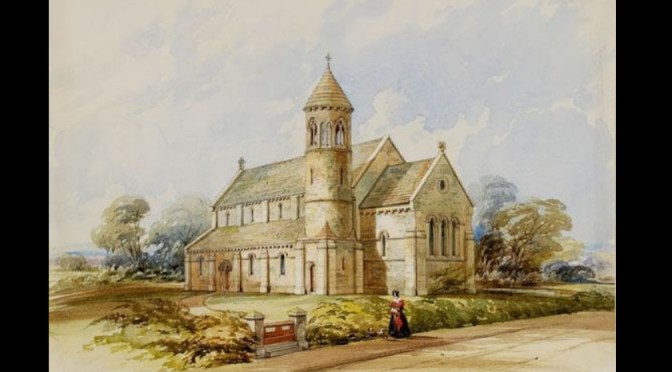
The painter of the beautiful picture above of St John’s when it was first built is not known.

Part Time Job

We are looking to recruit a part time administrator, with some flexibility over hours.  Attached below is a Role Description.

If you would like to know more about this, please contact Alan Crawley, 01252 820537 revd.alan@badshotleaandhale.org.

If you wish to apply, please send a CV to Alan with a covering letter explaining how you think you meet the requirements by Wednesday 15th May 2019.

Role Description for Paid Administrator