
Every year we produce a report on the parish and the many activities that go on here. This is available for the APCM and is also available below. Please click on the button below to download it.
Category Archives: Nurture
Small Groups Survey Results
Dear All
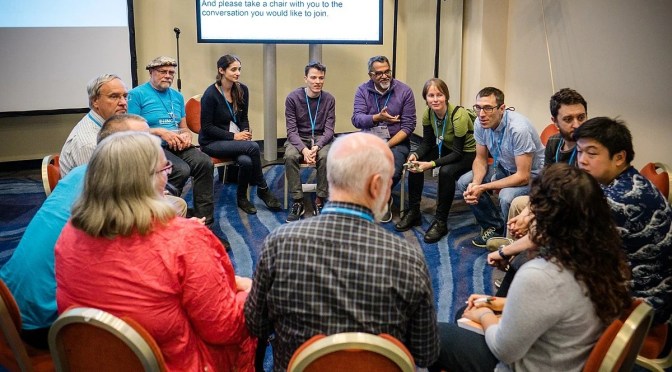
18 people so far have replied to the anonymous Home Group Survey I sent out, nine who are in groups and nine who are not. Thank you so much,
Things you like about groups:
- Getting to know people, learning together and deepening relationships
- I enjoy being with people and looking at the bible .
- I value the fellowship
- Sharing things that have been good in the week and maybe not so.
- Sharing Passages from the Bible which leads to conversation and questions”
- Sharing thoughts and knowledge
Thank you for the issues that you raised through the survey. Here are some thoughts:
I don’t like groups
I do you get you. Generally, I find groups a bit intimidating. However, we learn so much from being with others in a group. Jesus formed a group with his disciples and I imagine that was uncomfortable for some of the members. I wonder whether you would consider whether small groups might be good for you [and your presence might be good for others].
Matthew tells us Jesus said “For where two or three gather together in my name, I am there among them”. This seems to be a direct encouragement to small groups. St Paul says “Accept one another.” [Romans 15:7], and “Bear with each other.” [Colossians 3:13].
We are required to try to love our neighbours as ourselves. A man called Michael Harper wrote “Community is never easy. It means to allow yourself to be known as you really are …”
No group is available that I am interested in
Would you be willing to start one yourself or request someone else to start one?
It’s hard to make a regular commitment
It depends to a certain extent on what the group is doing as to how important that is, but no group is going to expect you to attend every meeting or even every other meeting.
I want a discussion group
‘Questioning Faith’ might possibly suit you – Wednesdays in January starting on 3rd Jan at 7:30pm at the Rectory.
I want current affairs and how they link with beliefs
The commentary and questions in the book ‘100 Stand-Alone Bible Studies’ [used by some groups] sometimes examine the link between specific themes in particular Gospels and current issues. If you joined a group, your interests would influence the approach.
Zoom is best for me
Bible Book Club is on Zoom.
I like sharing ideas and thoughts with the group. Nothing else.
That sharing is important in itself.
I would like more prayer but that seems not so easy
I think you should raise that with the group and see how others feel.
It would be nice to have a few more people
Yes. Some people see it as a sign of the health of the church.
If you would like to know more, please speak to a member of clergy or Richard Myers – rjhmyers@yahoo.co.uk
I pray that God will bless you and please pray for our small groups.
Blessings
Lesley

GENEROSITY WEEK. SATURDAY – SUPPORTING GOD’S MISSION
Busola Sodeinde draws all her previous podcasts in the series together, reflecting on The Great Commission in Matthew 28: 19-20, and how continued generosity is vital to sustain God’s work through his Church.
Listen Here.

GENEROSITY WEEK. FRIDAY – GENEROUS GIVING
In this next episode of the series, Busola Sodeinde reflects on The Greatest Commandment in Matthew 22.34-40, and how our faith and love for God is important when honouring Him with our giving.
Listen here.

Generosity Week. Thursday – Making a difference
Today, Busola Sodeinde focuses on the story of Elijah and the widow at Zarephath, in 1 Kings 17, teaching us about giving sacrificially.
You can listen here.

GENEROSITY WEEK. WEDNESDAY – OUT OF DARK TIMES.
The 2023 series continues with Busola Sodeinde, drawing on the Old Testament story of Joseph, beginning in Genesis 37, and how he was sustained through the valleys and mountains of life.
Listen here.
Generosity Week. Tuesday – Having enough.
Continuing the series of podcasts for Generosity Week, today Busola Sodeinde draws on the experience of the Israelites in the desert with Moses (Exodus 16), and how this teaches us the value of having just enough.
Listen here.
Generosity Week. Monday – Faith over Fear
Every day this week we are considering our own generosity and are providing links to short podcasts which the Church of England has provided.
Today Busola Sodeinde looks at how faith might overcome fear in uncertain times, using Matthew, chapter 6.
Listen here.
Generosity Week
Each year in the autumn we hold a generosity week, and this year it will take place from Sunday, September 10th to Sunday, September 17th. There are so many aspects to generosity, and Stella has written a really interesting article on generosity, that I recommend here. Most people think about giving money, or perhaps time or talents, and these are all important, but generosity is also expressed in how we treat other people – the way we speak to and about them, the way we forgive, make allowances for and give other the benefit of the doubt. It is in the way we use social media, the way we listen to others we don’t necessarily understand, the way we look for what unites us rather than what divides us. When we are generous in our hearts, it spills over into our lives. Generosity also extends to how we treat our planet so that we are more willing to take care of the resources and share with others, including the generations yet to come.
There are so many ways that we are generous as a church in our actions and support for many in our community in many ways:
- Foodbank collections
- Hygiene Bank collections and storage
- Farnham Help for Refugees collections
- Part of Farnham Connects (the group that coordinated work through the pandemic)
- Helping schools including mentoring at Farnham Heath End School
- Services and visiting at local care homes
- Little Bees toddler group
- Friday Night Games club for all ages
- Open the book – presenting Bible stories in our nurseries and schools
- Weddings, funerals, baptisms
- Connections at St George’s for the over 50s
- Support for the Sandy Hill Inclusive Partnership
- Arts events
- Questioning faith and study groups
- Social events
- Welcoming other groups into our churches so that they can hold their own events
- A port of call for those who are bereaved or troubled in any way
I’m sure you can think of many other things that we do as churches that support our community. We do have much to give thanks for and many things planned as we continue to serve our community.
I am told we have 59 people who give either through the PGS system or through giving to the bank, I don’t know whether you are one of our planned givers, but if not, I wonder whether you might like to be. If so – please contact our stewardship officer – stewardship.officer@badshotleaandhale.org and they will help you. Also, please would you take a moment to prayerfully review your giving for the next year. I know we are all in different financial situations, some much better off than others, but if you would be able to increase your giving that would help us with our financial security going forwards. At the moment, the average donation is £89 per month. I am very grateful for the increases in giving we have seen over the years. This year is the first year in over a decade that we have seen the level of giving reduce, which is very understandable given the economic downturn. This unfortunately coincides with a rise in inflation, and our outgoings increasing.
To make ends meet, each church needs to raise about £50,000 per year (and we have three) and the main way that we finance that is through giving, the projected income streams this year are:
| Total Giving | £67,500 |
| Fundraising | £9,000 |
| Trading (hall rentals, magazine income) | £46,200 |
| Gift Aid recovered | £2,500 |
| PCC Fees (funerals, weddings) | £7,500 |
| Other Income (including rental of curate’s house) | £19,000 |
| Grants | £525 |
| Legacies | £0 |
| Total | £149,000 |
If you would like more detailed information on the budget, then please ask me. The good news is, for the first time, our budget balances and we are paying all our bills on time. We have received a letter from the archdeacon commending us on our sterling effort. It is very tight, but the PCC have managed this process of being able to balance the books. This is mostly due to increased trading, and that has been a blessing both to us and our community – see the article here and also due to incredibly generous giving. Please continue to pray, and help us if you can, our finances are so very fragile.
I have also put together some ‘Situations Vacant’ – there are many roles that you may be able to help us with! To see that click here.
Thanks again for all you do,
Blessings
Lesley

What does generosity mean for us?
“Our days are happier when we give people a piece of our heart rather than a piece of our mind.”
No-one seems to know who said this, but it is wise advice and it fits in beautifully with the focus of the next week in the parish – Generosity.
Every year in the parish we hold a generosity week, and this year it will take place over the eight days between two Sundays – September 10th and 17th. The first is Generosity Sunday and the second is Gratitude Sunday. Generosity and gratitude are intimately linked.
What do we mean by generosity?
Generosity means giving. The Cambridge Dictionary defines it as “a willingness to give help or support, especially more than is usual or expected”. The Bible emphasises its importance again and again; in fact one source suggests that ‘giving’ is mentioned more than 1,500 times in the Old and New Testaments, though I did not try to count.
This giving can mean many things. Money, time and service are three that often spring to mind but there are more, some of which are discussed below. Giving, of course, can come from a sense of obligation: I am commanded to give (by the Bible, the Church, an appeal) and therefore I must. This can be good for self-discipline, which has its place, but on its own is unlikely to lead to sustained giving. Obligation can lead to resentment, and resentment is a bit of a generosity-killer.
So how can generosity be kept alive?
Love God and love your neighbour
Christian generosity is a response to God and to the commandment to love God and love our neighbours as ourselves. If we love our neighbours as ourselves then we will want what is best for them, we will want to share.
This can be tough as we may feel, particularly in hard times, that we haven’t got enough to share if we are to look after ourselves.
A grateful shift of perspective
Maybe one way of helping us here is to consider what we have to be grateful for. Research has shown that this is actually good for our health and gives us a more positive outlook on life. A useful daily exercise this week could be to think of 10 things we have to be grateful for. The exercise can help shift our perspective, making us less anxious and therefore more willing to share.
Focusing on a loving God can also inspire generosity. “We love because God first loved us”, wrote John in 1 John 4:19. God is a loving parent whose love can spill over into God’s children and out to others.
How, though, can we see God’s love for us? We can think about the times we have seen God’s love in our lives. And we can think about Jesus told people not to worry. He said: “Consider the lilies, how they grow: they neither toil nor spin; yet I tell you, even Solomon in all his glory was not clothed like one of these. But if God so clothes the grass of the field, which is alive today and tomorrow is thrown into the oven, how much more will he clothe you.” (Luke 12:27-28, NRSVA). I know that we often fail to do this but trying to do so can help us.
How might we be generous?
Giving money, time, service are starters for being generous, and incredibly important, but generosity is also an attitude of mind which involves the way we think about and treat people. Do we look on other people in the best light, believing that they too are humans trying to make sense of life, just as we all are.
There is a phrase in psychology called ‘unconditional positive regard’ which involves showing complete support and acceptance of a person no matter what that person says or does.(Note, this doesn’t mean accepting all behaviours or colluding with them, or allowing people to overstep boundaries, it means simply accepting the person). Trying to show this helps us look far more kindly on others than we might otherwise do.
Generosity involves the time we give to other people, the attention we pay them and the way we speak to and about others, both in person and on social media which can be a place of great cruelty as well as great support.
Generosity also encompasses how we treat people who we do not understand or who do things we cannot understand, who seem different, ‘other’.
It also encompasses how we treat the planet. Do we treat it just for our own benefit or do we think about how our actions affect others, including those not yet born.
An attitude of heart
Generosity like this comes from an attitude of heart and mind.
I think that it is also linked with what Paul said in 1 Corinthians 13: ‘If I give away all my possessions, and if I hand over my body so that I may boast, but do not have love, I gain nothing’. (NRSVA). It is linked to our perspective and changing our perspective may take time and sometimes it may feel costly.
I’ve been using a ‘Stages of change’ model to think about how we can change habits so that we move from thinking about changing habits, to preparing to do so, to actually doing it, to maintaining the changed habits, and I believe it can be used to help us become more generous.
So, we might think we want to be more generous then prepare to be so by, perhaps, talking to others about what we could share, or why we have enough or what we could do; or maybe by learning about what is going on in other people’s lives, or forming some sort of relationship with others which is actively focused on trying to learn about them.
Then we could take action in whatever way seems appropriate, which may be in giving of time, money, attention, service. It will be different for different people. When we do things enough times it becomes natural to us and then that becomes an ingrained habit. So generosity can become part of the way we see the world.
When generosity becomes a part of the way we see the world, then we will have bigger hearts to give pieces of to other people, and the world will be a happier place.
Stella Wiseman

