All posts by Administrator

Your July and August magazine is here

July is here and so is the July and August magazine from the parish. Inside you will find news of what’s on in the parish this month and the next.

There are lots of other community events and news reports, plus adverts from our advertisers without whom we wouldn’t be able to publish the magazine. Please do use their services and support local businesses.

Happy reading!

You can download the magazine here:

Vacancy update

The time without a rector will be longer than hoped

As you will probably remember, the timetable for interviews for the new rector of the parish had shortlisting at the beginning of April and interviews at the end of April.  We received one application for the post which was duly discussed at the shortlisting meeting and, after careful consideration, the shortlisting group unanimously agreed that the applicant was not suitable to take forward to interview.

This means that we move to a second round of advertising and interviews. The Church of England has some particular rules about how the process runs, including timescales, and our next round runs into the summer holiday season.  This means the agreed timescale for the second round is:

Advertise in Church Times: Mid-June through late July.
Applications close: 7th August
Short-listing: 14th August
Interviews: 9th & 10th September
Earliest likely start: January 2025

The vacancy will continue to be advertised on the parish and diocese websites.

While this is disappointing, the PCC was always aware that the vacancy could last a year or more, so we have plans in place to cover this period. We are already revisiting those plans to check that they are fit for purpose. One of the key factors that makes our planning easier is that we are looking forward to David Camp being ordained as priest at the end of June. This will give us one additional person to lead communion services.

Any questions please do speak to your church warden, to me, or to Stella.

Dave Walter, PCC Lay Vicechair

We all have our dragons

A sermon for St George’s Day by Pamela

Today we are celebrating St George’s Day.  St George – the patron saint of England.

I used to have a bit of a problem with St George and couldn’t understand why he was chosen to be England’s patron saint.  This was because all I knew about him was that he was a soldier and he killed a dragon.  It was the dragon that caused me the problem because it sounded as though St George had been invented and came from a fairy tale. 

Of course, once I did some research I discovered quite a lot about him and it turned out that he really existed. He was born in the 3rd century CE, more than 2,000 miles away in Cappadocia (modern day Turkey).

Like many saints, St George was described as a martyr after he died for his Christian faith.

However, it is the dragon bit that I want to concentrate on today. It seems that it was a story that was developed and popularised during the Middle Ages, long after George’s death. One version of the story is that he rescued a Libyan king’s daughter from a dragon and then slayed the monster in return for a promise by the king’s subjects that they would all become Christians and would be baptised. To me the more plausible story is that the story of George’s slaying of the dragon may be a Christian version of the legend of Perseus, who was said to have rescued Andromeda from a sea monster near Lydda.  It may also have simply been to illustrate the battle between good and evil.

The battle between good and evil does seem to have a lot of relevance today. We tend to think of dragons as existing only in children’s fairy tales but I think that there are dragons with us all the time.  Not the large scaley creature with a tail who breathes fire, but the dragons that we fear in our lives.   We often hear of the problems that young children and teenagers have, coping with peer pressure particularly on social media; we hear about bullying and, of course, children may have problems at school and feel under a lot of pressure to succeed in their exams.  There are probably many other things about school which cause worry or anxiety among young people.

Then when we look at what is going on in the world today, we can probably think of political leaders who we may fear or distrust, leaders who misuse their power, who want to make the rest of the world fear them and who seem to be threatening us because they want to have power over us all. When we listen to the news we may get the impression that they are trying to manipulate the people of their own countries into thinking that what they tell them is correct,that they are right, they are good and the rest of the world is evil.

Then there are the many dragons in our own personal lives. We all have fears and worries and stresses in our lives.  People may be under pressure at work, have  monetary worries and wonder how they are going to be able to feed and clothe their children. Older people may wonder how they are going to keep their homes warm. Others may have health issues that cause worry or fear – things that have to be dealt with.  Voluntary workers can feel pressured to do all the things that seem to be expected of them; they may worry about trying to fit everything into their lives, worry about making mistakes and worry about letting others down.

But, as GK Chesterton once wrote:-

“Fairy tales are true not because they tell us that dragons exist but because they tell us that dragons can be beaten” .

So how do we deal with our dragons?  How do we beat them? How do we slay them?

This I think is where our faith in God comes in.  God may not wipe away your fears or your anxieties but I have found that it is the knowledge that God is there with me that helps me.  It has always been in the worst moments of my life that I have been most aware of God – most aware of God’s presence.  It is where prayer comes in.   

 Prayer for me is my sort of chat time with God.  Yes I give thanks for the good things that have happened, but I also talk about people I know who are ill or going through a difficult time and ask God to help them.  In other words I’m asking God to help them deal with their dragons.  I talk about things that are going on in the world – the political dragons that I fear. I talk to God about all the things that worry me; I talk about all my dragons, and I do have dragons.  I don’t use the sort of formal words that you might find in a book of prayers.  I do quite literally pour everything out to God – I talk to God as I would to a trusted friend.  There is a great freedom in doing that because I can talk about anything and everything and at any time and anywhere and not be judged or criticized or told that I am silly to worry about these things.  And yes, I admit, sometimes I get angry with God because I want everything sorted out to make everything alright.  But I don’t think that is God’s way.  God gave us all free will.  God doesn’t control us. 

We have to seek God out, we have to ask for the guidance and the strength that we need and we have to be prepared to listen to that Guidance.   If we ask, I believe God will help us to find the strength that we need to beat those dragons that are trying to devour us.  God will give us the strength to cope with our fears and our anxieties, the strength to cope with our lives whatever the future holds for us. 

So will you ask God to help you to find the strength to deal with your dragons?

Perhaps St George is a good patron saint for us to have for England after all,  someone to intercede for us, to offer up more prayers for us, when our dragons need to be slain.

Remember Psalm 46, verse 1 “God is our refuge and strength, a very present help in trouble”.

Mary Magdalene’s story

My name is Mary. I come from a place called Magdala, so I am known by many as Mary Magdalene. People have said many things about me over the years, many, many things to suit their own ideas. All I will say is that I became a follower of Jesus early on. He healed me and I followed him.

Let me tell you about that first morning…

Shhh! It was so quiet, so very quiet. It was dark still, that first morning. My nerves were jangling, I had not slept for three nights. The first because I was fearful, but still hopeful, trying to guess how he would escape the guards. For surely he would. And the next night, that Sabbath night, and the next, I did not sleep. I wasn’t sure I would ever sleep again. How could I? Not after what I had seen. Not after seeing and hearing his agony, not after seeing his broken body, the way he tried to breathe, the awful rasping, the cries, his cries and those of the two men with him. Not after being a witness to that. His face, the mask of pain and despair, was imprinted on my mind. Even now I shudder as I remember it. And his mother, his broken mother, her soundless sobs which she tried to hold in, as she held him, his blood staining her robe, covering her hands, her face as she kissed him, and then the howls of despair at her home, her shaking, my shaking, and everything we knew crushed. All light had gone.

Maybe that was why I left when it was still dark to go to his tomb. I could not bear the light. And I was frightened too, afraid of the Romans, afraid of the religious leaders, afraid, even, of what my neighbours would say. They still treated me with fear and disdain, even after the demons had been cast out from me. They would say that I was like the wild ass; you may think that you have tamed her but she will kick and bite and run wild again. And now the one who had healed me was gone.

It was so quiet. I crept towards the tomb and, in the dark I could not at first make out what had happened. But as the first rays of the sun touched the eastern sky I saw that there was a gaping hole. A gaping hole where the stone should have been over the entrance. They must have taken him! Someone must have stolen him! Why? Who? I was terrified. Where was he? Was I not even going to be able to mourn in peace? I turned and ran, ran all the way to find the others, Simon Peter, John. I gabbled at them that he was gone, stolen, body snatchers, maybe the Romans, but why? And they ran, and they saw that he was gone. Simon even went in. And then they left, confused, talking, arguing even. Saying he was not there and that maybe this was right and good. How could it be? How could anything be good and right? Stupid men with their stupid noise.

I stayed. And it was quiet again. I could hear birds, the first scuttling of lizards as the sun warmed the land. the buzz of flies. I shuddered at the buzzing of flies, remembering the buzz around his body on the cross. I glanced up to see if there were vultures there, circling, looking for death. But the sky was clear. Blue. Why did it have to be blue and beautiful? Why did anything have to carry on now that he was dead? Tears coursed down my face and I stifled my sobs.

My blurry vision settled again on the tomb’s entrance. Was he really not there? And why did it seem so light there? Was it a trick of the sun? Of my tears?  I crept forward, my steps soundless. I bent down and peered in and gasped. Two men in white. Sitting there. Had they been there all along? Had John and Simon seen them?

They smiled at me, and one of them asked me, his voice low and gentle:”Why are you crying?”

“They have taken my Lord away,” I said, “and I don’t know where they have put him.” 

Then I heard a sound, a soft footfall behind me and I turned and saw another man. I was weeping so hard that I could not see him properly, or was there some other reason why I thought he must be a gardener? I didn’t recognise him. I couldn’t do, because I knew he was dead.

But then I heard his voice, just one simple word, a word I heard with my ears and with my soul. “Mary!”

It was him! He was back. I leapt at him, held him. My heart pounding. He was back. But he pushed me gently to arms’ reach and said that I must not hold him as he had to go to his father. I didn’t understand then. But he told me to tell the others. His father and my father. Everyone’s father.

I didn’t sleep that night either. I was so excited. I felt maybe I had imagined it, but no, that voice in my soul. Mary. It was him. He knew me.

Then I slept the next afternoon and night. And when I woke before dawn the world was quiet again. Quiet and waiting. I didn’t know what had happened. I didn’t know what we were going to do, what he was going to do. And who would believe us? Unless he was going to appear with some sort of army, that’s what some of them said, a supernatural army. But his mother and I didn’t think that. We knew him better than that. We felt it too, deep down inside. It wouldn’t be something dramatic in the way most people think of drama, nor huge in the way that most people think of huge. Though it would be huge and dramatic, it would be a revolution, life-changing, life-renewing.

But it would start quietly, it would start small. With just a few. And it would start, it was starting already with the change in us. Without that change, who would believe us, they’d think we were mad, delusional, thinking we had seen him just because we wanted to, because we couldn’t accept that he had gone. And who would blame them? But with that change, that quiet, but overflowing certainty that he was alive, he is alive, that he still knows us, still calls us to follow him, then they would know start to ask the questions about what had happened, then they would start to believe us, they would start to change too.

Yes, shhh, it starts quietly in us, in the change in our hearts as we open ourselves to follow him, as we open ourselves to love, to his love, to the love of God. And then it grows and it grows, and it really is quite huge, and dramatic.

Your April magazine is here

Welcome to the April magazine from the Parish. Inside you will find poetry, an obituary of Rev’d John Innes, news about St George’s Day and St Mark’s Day, St Gertrude, prayer, what’s on, the Church Cat, and much more, including our advertisers without whom it would be hard to publish the magazine. Please do check them out and use their services.

Happy reading!

Guest Blog – a guide to an Anglican interregnum

As you may know, we are ‘in vacancy’, or as it used to be known ‘having an interregnum’. Not everyone knows what that entails, but thankfully The Beaker Folk of Husborne Crawley produced a handy guide back in 2016 and have kindly said we can repost it here.

You can find the original post here.

Oh, when somebody referring to a nearby parish referred to the “interregnum”, did it take me back. I remembered that time, between the Extremely Primitive Methodists and the Beaker Folk, when I worshipped in a Church of England church in that mythical state.

For those who don’t recognise the word, an “Interregnum” is the word the C of E uses informally for the time “between the reigns” of two ministers. It is a liminal time, like that at New Year. There’s a time in between the two – the old vicar’s gone, but it’s not the new. Certain actions are necessary between the reigns, which I will explain for you now.

The Scouring of the Church

In a parallel to the removal of yeast at Passover before the time in the desert, all traces of the last minister must be removed from the building.

You must understand that, as long as the minister is there, anything they leave lying around is treated as sacred. If the vicar constantly leaves their printed-out sermons in the pulpit or laying around the vestry, they will have been gathered up and preserved somewhere on the assumption that, once the vicar has got them all back, they’ll be bound into a kidskin book or something. The minute they’re gone, this illusion is shattered. The shreds and tatters of seven years of theological reflection are taken to the north side of the churchyard and ceremonially burnt.

The Establishment of Control

At some point in the interregnum, someone is going to want to grab some power. They will decide that at this time in the desert, God is raising up a prophet like Moses to guide his people. They may well use the word “liminal”.

Of course, they must be stopped. To do this two groups will be appointed: the Watchers and the Enforcers. The Watchers – a shadowy unofficial sub-committee of the PCC – will watch out for the trouble makers. Once they are identified, the Enforcers will subtly remove them from active parish involvement. This might mean organising the PCC to vote against anything they suggest; letting their tyres down to stop them making it to meetings; or hacking their computers to stop them emailing the bishop. But whatever they do, the Enforcers must not run the self-appointed prophet out of town on a rail. Not unless they really need to.

Moderating the Lay Reader

The parish Reader will normally fall into one of two categories. If they are terrified of having to preach more, they are the sort of modest example that is needed. Encourage them to preach more. If they start arguing that it might be better just to get retired priests in once a month, and start using the phrases “Service of the Word” and “Creative Liturgy”, get hold of the list of retired clergy, fast.

Which brings us onto…

The Retired Clergy

Increasingly, and thankfully, the people who keep vast chunks of the C of E functioning, particularly in the parts of urban England which are nice to retire to.

But retired clergy have a kind of spidey-sense which enables them to smell a vacancy at 20 miles. Indeed, even as the first thought that it’s time for pastures new crosses the incumbent’s mind, a retired clergy will be on the phone to the local undertaker offering any help they can give.

The Undoing of Things That Have been Done

The Big Book of Rules says you can’t make any changes to the forms of service or church ordering during an interregnum. But the Traditions of the Elders say that if you are just putting things back as they were before, that’s OK. So altars that were pushed against walls will be pulled away again. Tables that were pulled away from walls will be pushed back, and attacked with heavy-duty bolts. Common Worship pamphlets will join the vicar’s old sermons on the fire, to be replaced by the old BCPs. It will be agreed that not using full robes was only ever an experiment.

The Ageing of the Board of Past Vicars

The outgoing vicar’s name will have been added to the board on the south wall at a point about halfway through their reign. The last four years it will have shone like new gold alongside the faded names above. Now, the Diocesan Tarnisher will be called in to make the recently departed minister as one with the priests of the past.

The Parish Profile

The PCC will get together to decide that what they really need is a minister who combines the caring of Florence Nightingale, the inspirational preaching of John the Baptist, the skills in children’s work of Mary Poppins and the evangelistic powers of St Paul.

Canonization

The interregnum ends when after a suitable period the new minister – long awaited and prayed for – arrives. At their first few PCCs, it will be discovered that the previous incumbent had the caring of Florence Nightingale, the inspirational preaching of John the Baptist, the skills in children’s work of Mary Poppins and the evangelistic powers of St Paul. And would never have countenanced any of the things the new vicar is suggesting. The Churchwardens will remember all the things they have returned to the former places over the last eighteen months. And keep their counsel.

And the winners are…

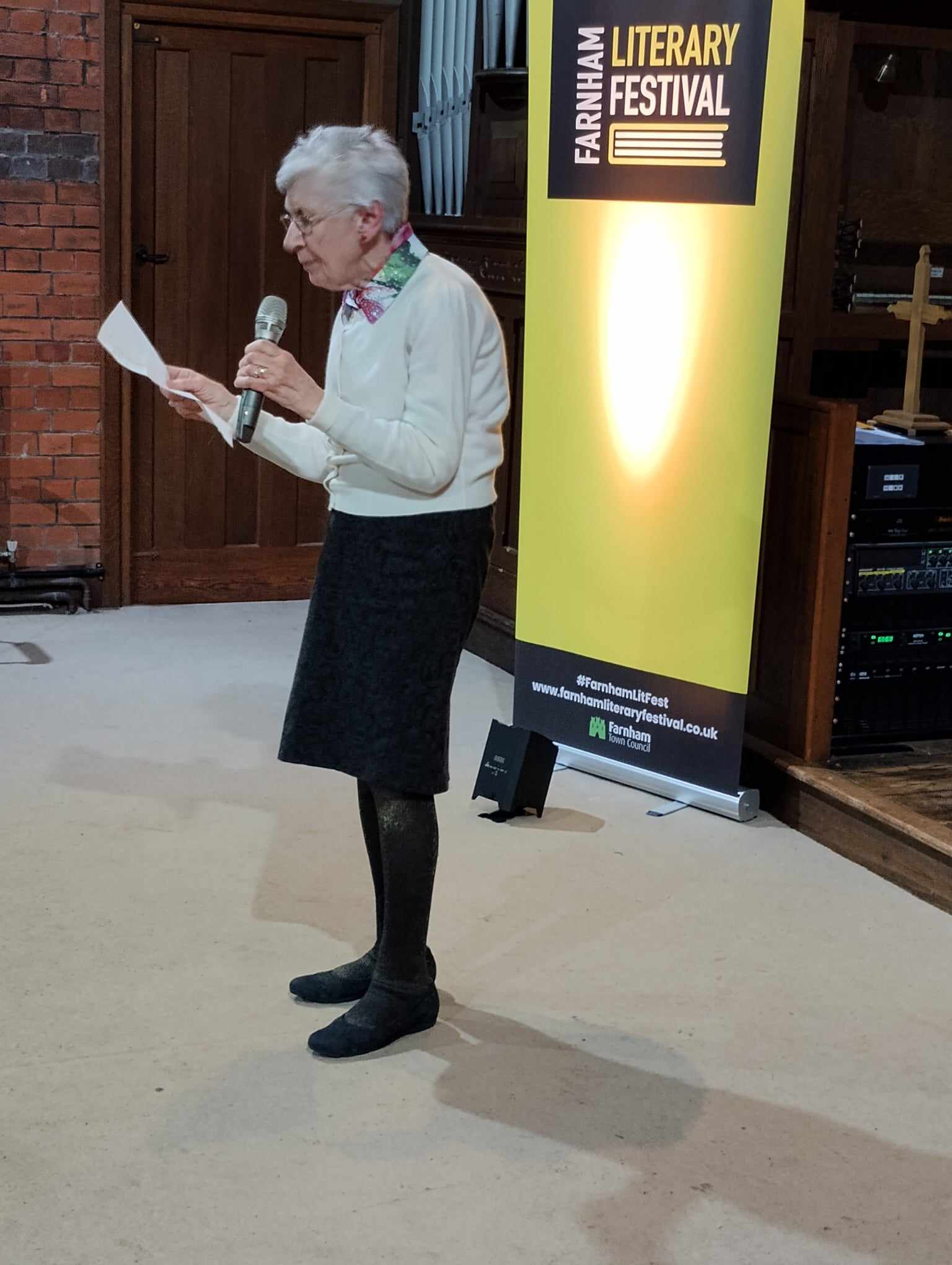
The Farnham Poetry Competition, part of the Farnham Literary Festival, attracted more than 120 entries from across the country, all writing on the theme of Friendship.

The oldest entrant, whom we know about at least, was 96, the youngest was just four and, once again, we were awed by the talent and creativity of the entrants.

There were two categories: Under-16s, judged by poet Coral Rumble, and adults, judged by poet Linda Daruvala, and the results are:

Under-16. Highly Commended:

Emily Teuten – My Big Sister
Peggy Wingham – My love recipe
Sienna Law and Tilly Wild – Friendship is something no-one can take
Bea Timewell – You and I are sun and moon
Zahra Rafiq – A poem of friendship
Hugo De Gruchy Webster – Friends are big, friends are small
Scarlett Harwick and Bella Lister – Friendship is like nature
Charlotte Keleher – One thing can change the world
Zoran Stimson – True friends, Always disagree
Dolcie Jennings – I am Dolcie and I am 4

Third prize: Emily Tarrant – Peapods

Second prize: Salimata Gassama – Fractured Bonds

Winner: Jet Pariera-Jenks – Digital Friendships 

To read the top three prize-winners, click here.

Adults:

Highly Commended

Vinnie McGuire – Locked In A Van
Kate Kennington Steer – Visitation
Elly Jones – Exactly What She Deserves
Victoria D’Cruz – Artistic Licence
Ella Zubeidi – Adrift
Lisette Abrahams – Marking The Miles
Vicky Lowe – A Solitary Word

Third Prize: Kay Wadham – Farewell

Second Prize: Liz Kendall – She’s Never Seen The Mummy

Winner: Nicole Coward – These Are The Women

To read the top three prize-winners, click here.

Thank you to all our entrants and look out for further information about poetry at St Mark’s Church soon.

The winning poems of the 2024 Farnham Poetry Competition – Adult

Winner

These Are The Women
by Nicole Coward

On the day of your Mother’s funeral,
These are the women,
Who showed up in the brutal blue half-light of early morning,
Buttering bread and piecing together sandwiches,
Boiling water for tea,
The movement of their hands,
Cupping your tattered heart,
As the weight of grief tore at your edges.

These are the women who across the seasons,
Bear witness to snail trails of tears
Sliding into nests of unkempt hair,
Their deft hands folding washing,
Arriving unprompted with a casserole, a plated roast, flowers, cigarettes, a slab of fruit cake,
These are the women who stand and wipe dishes, wring out dish cloths, The women who see what needs doing, and turn up, and do it.

These are the women who share joy,
As it threads it’s way like water,
Spilling into life’s crevices,
Shared meals, throaty laughter, baking with smears of jam,
The hilarity of toddlers, growing children,
The women who press twenty pence pieces into sweaty palms,
And send kids to the shops for sweets,
Pacing kitchens, holding each other’s babies,
Moments like light refracting on the dew of a spider’s web,
Knitting a lace of beauty across history.

These are the women who can read you,
By the angle of your head,
As you stand at the sink washing dishes,
The women who will know your thoughts, as your glance slides off their faces,
Who can smell the intimate details,
Of the battle beneath the sunlight falling on your skin.

These are the women who show up for your hard moments,
And hold it as a privilege to walk beside you,
The women who carry each other across the decades,
Through their own faults and broken imperfections.
These are the women
Who love each other always and anyway,
These are the women who love you just as yourself.

Second prize
She’s Never Seen The Mummy
by Liz Kendall

Regressing, we watch the films of our adolescence together again.
This time in the home you own with your husband,
in which you raise your children, in which you cope with adult life.
I have not done this.
But at our age we both know death,
and have looked in its face and met its gaze more than once.
When we laugh now it is fuller and freer for the sudden lift of weight:
your anxiety for your children; my blurred vision over my staggering, carrier bag career.
Something sharp is starting a rip, just there where I can’t see it,
or perhaps something tender is squashed already,
and beginning to leak in drips.
What is happening today at school? The teachers are so stupid
and the friends are not the ones you’d choose.

We watch films and talk about them
and in between we talk about everything else
and it is the same language, we need no subtitles.

You told me of meeting someone our age who had never seen The Mummy,
and you followed this shocking revelation with the words:
 “I’ve watched that film every six months since it was released”,
and I laughed, and reached for another handful of whatever
children’s party food we were scoffing at 10am on a Friday morning,
and thought “Yes. That is why I love you. That’s why you’re my friend.”
Because in all the exhausting tangle of ageing parents
and illness and schools and work, real work and motherhood,
high-level motherhood of homemade cakes and justice and consistent patience,
you’ve never neglected Brendan Fraser.
And we both understand that this matters.
This, too, is devotion;
is what makes you such an exceptional woman, mother, wife and friend.
Every little lamb is followed and found, brought back to the fold:
a parable of care.

Before the children, before you wed,
you took a week off work;
absented yourself from your proper, grown-up job;
because the box set of The West Wing’s final season had been released
and you were going to watch it as it deserved:
immersed, in solitude, at home.
You goddess. You inspire me.

We were eleven when this began, talking and watching,
those years of first blood;
learning to cope with it, knowing it would be back,
like Arnie, at inconvenient times with pain like metal fists.
Your fainting fits at the iron’s lowest ebb;
but that tide rose again, and with it your children.
You don’t faint now. Your diplomacy looks like a flag of peace
and you wrap it so gracefully, concealing the sheath
of the sword you hold at your core.

Comfortably we regress; the green velvet cushions familiar,
old actors rewound to their prime, our delight still fresh.
The geeky thrills that sustain us in emergency
for emergency will come: has been and gone
and lurks now, waiting for its overture
on which neither of us has pressed play.
But it is not this day. May it not be today.

We know, we have bled and bled again and we know that these hours,
these sweet hard-soft popcorn moments, are how you keep
sunny and smiling; blond hair and blue jeans and a silver star
sparkling wide on your jumper as though you’d never lost anyone.
We both know that with only real life to live in we would each of us sink.
Give us films we’ve seen before, together,
and books we’ve read before and shared before, together,
before all this life and death came.

Third prize
Farewell
by Kay Wadham

The seat where she used to sit on the lonely cliff
Stands empty now.
She would muse on the rolling waves
And a broken vow.
Still the waves roll in as they did before
But she is gone.

Now he stands alone on the windswept shore
As the seabirds cry.
And the desolate sob that
escapes his throat
Is a last goodbye.

The winning poems of the 2024 Farnham Poetry Competition – Under-16s

Winner

Digital Friendships 
by Jet Pariera-Jenks

I have thousands of friends and likers
And all of them follow me
As if I am the coolest girl in class
Instead of little nobody.
I have thousands of subscribers and followers
As if I am the latest trend
Even though I’ve never met half of them
I’m proud to have so many friends.
Or should I call them strangers?
They could be anyone
I don’t know all their names
Or even where they’re from.
My friends could be any age
Are they older than I guessed?
I think I should be more cautious
When I’m sent a friend request.
We exchange ‘laters’ and ‘lols’ through texter
Our messages are emojis and GIFs
I have thousands of friends and strangers
In my digital friendships.

To see Jet perform her poem, click below.

Second prize
Fractured Bonds
by Salimata Gassama

I stand on the threshold of adulthood, A time of transition, a turbulent flood. Friends once close now drift away, Leaving me with memories, stark and gray. 

Adrift in a sea of changing tides, I cling to what once was, where my heart resides.

The laughter, the tears, the shared dreams we spun, Now shattered like glass in the setting sun. 

An allusion to youth, a fleeting sigh, As ambition drives us to reach for the sky. But in this journey of growing apart, Anxiety grips as it clutches my heart.

Yet courage whispers amidst the fear, Friendship’s essence ever clear. For in abandonment’s cruel sting, True bonds emerge with resilient wings.

 Freedom found in letting go, Embracing what comes, letting new friendships grow. So here I stand, on life’s grand stage, Understanding now, through wisdom’s gage.

Third prize
Peapods
by Emily Tarrant

‘Like two peas in a pod’ – what they say to inseparable friends, and young lovers.
But some pea pods, the peas are detached, and the friendship is broken.
Some peas, they quibble and quarrel in their pods.
Some peas, are happy and chuckle and grin.
Some peas, leave the pod before you take it in.
Some peas, go nasty, foul and rotten.
Some peas, yet difficult, are best left forgotten.
Such is the life of friendship and love,
Such is the life, of peas and pods.

Hope amid the Chaos

For LGBTQIA+ people and their allies

Hope Amidst the Chaos, a Holy Communion service with music based on Les Misérables, for LGBTQIA+ people and their allies, will take place at St Mary’s, Quarry Street, Guildford, on Wednesday, March 20th, 7.30pm.

Come along and sing some really cracking tunes and share in a communion service on a theme of hope amidst the chaos. Contact Stella for more details.