Tag Archives: God

What is your vision for the parish?

We are holding a Vision Morning on October 4th, 10am-12pm, at St Mark’s Church, so that we can all have a say in the future of the parish and try to discern what God is calling us to in this new phase.

What would you like to see happening in the next years? New services? Youth work? More support for older people? Families? Tackling isolation? Evangelism? Prayer?

Have you a particular idea which you think might be part of the way God will work among us all and the communities we serve? How might we work together to allow God’s light to shine through us?

Even if you haven’t a single idea, come and listen and find out more.

All welcome. If you have any questions contact Lexi on
07792233477

Pamela’s Licensing

Pamela Marsham will be licensed as a Lay Associate Minister at Guildford Cathedral on Saturday, July 5th at 10.30am.

As a Lay Associate Minister, Pamela will continue work alongside Lexi and the rest of the ministry team. Her course has focused on preaching, teaching and discipleship and she has also done the diocese’s Worship Leaders Course.

“That for me is the most important as my focus is on leading worship. and Lexi is keen for me to continue to do that,” says Pamela. “I have been lucky really, in that I have been able to gain experience in this while training.”

During the course, Pamela particularly valued meeting others who were on the same path as she was. She adds: “We were all on a journey and it was exciting as we didn’t really know what it would actually lead us to do.  I think there are some in the group who will continue the journey and probably go on to train to either be LLMs or even become ordained.  Those roles are definitely not what I will do as obviously age is against me but I can lead worship and that is a great privilege.  I hope, too, that I am showing that age is not a barrier to serving God. 

“I am also reading more theology and am constantly learning more about what the Scriptures teach us.”

Tickets to the licensing have been allocated but if you would still like to attend you can do so and can have unreserved seating which will be towards the back of the cathedral.

Join our contemplative prayer group

There is a contemplative prayer group meeting in the parish every Wednesday at St Mark’s Church from 3-4pm.

Contemplative/centering prayer is a silent form of prayer which can take place alone or in a group. The person or people praying remain silent and usually repeat in the mind a word or phrase such as ‘Maranatha’, an Aramaic word which means ‘our Lord, come’, or ‘our Lord has come’, depending on where the emphasis is placed. Some people prefer to use an image rather than a word.

The idea is that the word or image centres the mind and encourages it not to wander or flit from thought to thought, as human minds usually do, but instead just to be as we are in front of God. We don’t ask anything of God, we simply are there.

On Wednesday afternoons a group of us sit together in St Mark’s and spend 20 minutes in this form of silent prayer. We then drink tea, eat biscuits and chat.

It is a time of peace and stillness and highly recommended in this furiously busy world.

Anyone is welcome to join us.

The Practice of Contemplative Prayer

Would you like to deepen your understanding of God, understand more what God might be calling you to, hear God inside you? If so, join us in an exploration of Contemplative Prayer.

Reverend Stella Wiseman will be running a short course on contemplative prayer this Advent, on Tuesday afternoons at 2pm at St Mark’s, beginning on December 3rd.


Also known as centering prayer, contemplative prayer is a way of bringing ourselves before God in stillness. It is similar to mindfulness practice in that you take a word of short phrase —Maranatha is a good one, or Jesus, or Divine Love – and repeat it slowly in your mind as you breathe in and out, returning to the word or phrase as your mind wanders (and it will) while you sit in silence. You do not sit and think about what has been or what will be, but just are there in the present moment, in the presence of God.

There will be a short introduction and reading at the beginning of each session and then we will spend time in contemplative prayer before a short reading at the end. If you’d like to know more, contact Stella on 07842761919 or email at revd.stella@badshotleaandhale.org

The invitation

Instead of a sermon on June 23rd, there was a story/imaginative exercise. The congregations at St Mark’s and St John’s heard the Gospel reading Luke 14: 16-24 about a banquet which a man’s respectable friends refused to come to. You can read it here.

This was the story:

I want you to picture something. You have received an invitation to dinner. When you ring the door of the house it is opened by a woman who smiles at you says “Welcome.”  But you feel there is something a bit odd. She is big for a woman and her voice is deep.

You follow her through the house to a room with a huge wooden table and chairs all around. The table is set for dinner and candles on the table make it warm and inviting.

Two men come in, they are holding hands and they greet the woman there “Hello Rachel,” they say.

So she must be a woman.

“Ed, Mike,” she says. “Do sit down.”

Then another person comes in. They are young, boyish, but you are not sure. Is this a young man, or a young woman?

Others arrive. Some of them are alone, some are in pairs, all ages, casual, smart, men, women and those you really don’t know about.

“Come and sit down,” says Rachel, but you feel shy, nervous. Are you in the right place? And who are all these people? They don’t look like the people you normally mix with. You are not sure you fit it.

Then someone else comes in from a door behind you and stands next to you. He greets you by name and you feel that you know him, have always known him. He has such a kind face, the kindest you have ever seen. Maybe it will be alright.

Rachel comes over to him and hugs him and he hugs her tight. Then he waves at someone else and others come over. There is a lot of laughter and hugging and also the food smells amazing. Fresh bread, fish, spices, wow!

You are so hungry.

But you hold back. Is this the place for you? The people seem friendly and happy but they are different. You’re not sure that you should be there or be seen with them. You turn and decide to head out, but maybe you will pop into the bathroom on the way out. You are heading in there when you see Rachel. She’s going to the bathroom too , but really is she really a woman, what is she, no he going to do in there? You are suddenly worried.

You move away from her and find a side door but on opening it there is something going on out there. There’s a group of people, waving banners and shouting. “It’s Adam and Eve! Not Adam and Steve!” “Wake up to the Woke Agenda – protect our children!” “God’s judgement is coming.” “Men are Men and Women are Women. Fact!” You recognize some of the people – you think they might have been on TV. And there is a priest or two, a neighbour, a man wearing an oversize cross around his neck, a woman waving a Bible. They look angry and you are really quite scared. Your neighbour sees you and starts towards you. Then she stops and points at the house behind. “You’ve not been in THERE have you? With THOSE people?” She backs away with a look of disgust on her face. You see her husband too; he looks upset and embarrassed.

“No I…” you start, blushing, but then you remember the man with the kind face and remember how he greeted everyone and how pleased they were to see him and how pleased he was to see them. You wish he was here now. He’d make you feel OK and less scared and lonely. And he didn’t mind being in THERE with THOSE people. There’s something in the back of your mind about love and not judging.

You turn back towards the house but the door you came out of is locked. It must have slammed shut behind you.

Frightened you start to run round the side of the building and you have to go past the angry crowd. They are chanting now. “Sinners! Sinners! Sinners!” You run past their angry faces, their placards. Someone spits at you. You run to the front door and hammer on it. It opens and you fall in, straight into the arms of the man with the kind face. You are safe.

He looks at the crowd and his eyes are sad. He says something under his breath and then he shuts the door and guides you into the room with the table.

There’s a place at the table for you and a plate full of food, a glass of best wine. There is chat and laughter and you relax. You recognize a woman and realise you have seen her at church. She tells you her story and you find out that her eldest child is transgender but she is not sad – she loves them just the same as she always has and she knows how much happier they are. She does worry though as the world isn’t safe for transgender people. Violent attacks are on the up. Opposite you is another woman who tells you about the time she was attacked just for walking down the street.

Then you meet a couple of men. They’ve been together for 36 years. “But we are just as much in love,” one says. “Even though he still won’t put his dirty plates in the dishwasher!” says the other and they laugh.

There’s Sally whose life was she says “A total mess until I accepted who I was.” And Colin who used to be married to Mary but he could never be the husband she wanted. “We were best friends when we were at school so I married her because I thought it would make me straight. Poor Mary.” Poor Colin too you think. “We’re great friends still though” and he points her out. She looks happy now, and so does he.

There’s Danni who is trying to work out who they are; Janey and Susan who met when they were 15 and are now 75. “We had to hide our love from everyone for much of the time.” And Tariq whose boyfriend was attacked and killed in a homophobic attack. He sits quietly near the man with the kind face and seems comforted by being beside him.

On the other side of the man is Anita. She seems nervous but the man is encouraging her to talk. Like you she has questions but she doesn’t like to ask in case people judge her or call her a bigot. She’s not previously come across many people like the ones in the room and she wants to know more. The man tells her that asking questions with respect and no judgement is the way forward. You are relieved. You, too, want to learn.

Rachel serves you more wine and you hear her story. She transitioned when she was 40, after years of being unhappy, and now she is training to be ordained in the Church of England. She’s gentle and full of grace and you feel ashamed for what you thought earlier.

And in the middle of it all is the man. He sees you looking at him and he smiles, a smile that warms you right to the depths of your soul.

He speaks your name and tells you: “These are my friends, welcome at my feast. I’m glad you have met them, glad that you can see that love is here. And where there is love, there is God.”

Questioning Faith – ask whatever you want

Who exactly is Jesus? The Christmas season celebrates his birth of Jesus of Nazareth, but who was that Jesus and why is he so important that we remember him 2,000 years after his birth? This is the sort of question which will be raised in ‘Questioning Faith’, a series of five Wednesday evening discussions which will take place in Hale, starting on January 3rd.

Questioning Faith is being run by Lesley Crawley, and anyone who is interested is invited to come to The Rectory, 25 Upper Hale Road, each Wednesday at 7.30pm from January 3-31.

Anyone who has questions about God, the Christian faith, church, or anything about the meaning of life, is invited to join in for 90 minutes of discussion every Wednesday evening. The sort of questions raised on Questioning Faith courses include What about the problem of evil?  How should we read the Bible; what kind of literature is it?  What is faith?  Why go to church?  What is the nature of God?  Who is Jesus?  What is prayer?

No question is too small, too daft, or too controversial to ask, and everyone is welcome whatever their beliefs. After the course there will be the opportunity to be confirmed into the Anglican Church at Easter in Guildford Cathedral, though this is, of course, optional.

For further information about Questioning Faith contact Rev’d Lesley Crawley on 01252 820537.

A Week of Accompanied Prayer

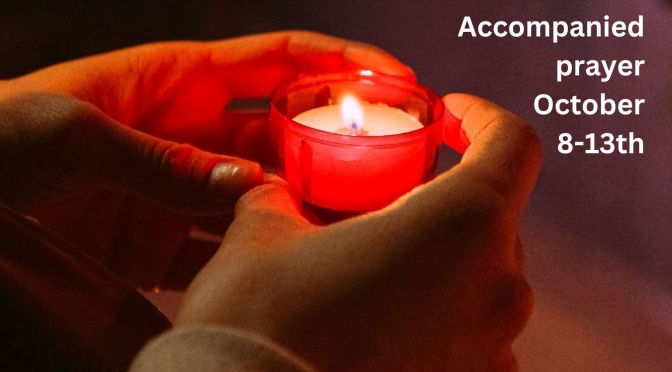
There will be a Week of Accompanied Prayer at Guildford Cathedral from October 8-13, hosted by the Spiritual Directors Network.

This week is for anyone in whatever place they may be on the spiritual journey. If you sense a longing to deepen your life in God, a desire to make sense of your faith journey or wishing to find different ways to pray then this week may be for you.

Not many of us have the time nor the resources to stay at a retreat house, but this week brings the retreat to you in your everyday life. It starts with a gathering at the cathedral on Sunday, October 8 at 4pm for an initial introduction and then everyone will meet a prayer companion. Everyone will then commit to pray for half an hour a day for the week and to meet daily, at a mutually agreed time and in absolute confidence, with their companion to talk about their experience in the prayer and suggested scriptures.

On Friday, October 13, there is an informal service and refreshments at 7.30pm at a venue to be announced, with the opportunity to hear and share if you wish what the week has been like. If several people in our part of the diocese want to apply, then we can arrange for prayer companions to meet here rather than having to travel to Guildford.

Margaret Bowers, a member of St George’s Church, writes: “I’m very excited to introduce this to you since it was one such accompanied week that opened for me prayer and closeness with God in ways I hadn’t previously experienced nor been taught before. It also led to my training as a Spiritual Director or Companion as someone who journeys alongside others as they too discover a lived experience of God more and more in their everyday lives.

“Certainly, after such a week I felt affirmed in the unconditional love of God, encouraged, supported, surprised, and energised in my spiritual journey and learned a truth that still holds today, which is that when we intentionally set time aside to be with God then God delights in drawing close to us in unexpected and wonderful ways.”

Below you can download an application form to be sent to woapguildford@hotmail.com but if you wish to ask Margaret Bowers anything please contact her at margbowers@aol.com.

Prayer – what is the point?

Yesterday we came across a blog post by Jonathan Clatworthy who writes on God, philosophy, theology and ethics, and it was so useful we wanted to share it. You can find the original here at

but to save you the effort of clicking, here it is below (but do click on his website; there are plenty of other great posts too).

Is there any point in praying?

I actually believe in praying, but not for the reasons many people give. The Christian tradition offers different, and often conflicting, accounts of how to do it and what to expect from it.

This post offers my way of trying to make sense of it.

Can it ‘work’?

At its most basic, praying is what people do when they are desperate. At the beginning of the Second World War, everybody prayed. Even atheists prayed. If there is anyone up there, please please please!

To ask whether it works is to look for evidence. Some researchers ask people what they prayed for and whether it happened. These studies can produce interesting results, but they don’t prove anything.

Others say the opposite: praying can’t work because it’s mumbo-jumbo. Superstition. Unscientific. This is equally unprovable. It’s an echo of that nineteenth-century fantasy that scientists were going to find out everything about everything. If they did, it would follow that anything scientists couldn’t establish doesn’t exist. It’s over a century since scientists believed this. What they have shown is that the universe is far more complex than the human mind can understand. We’ve increased what we know, but what we don’t know has increased much faster. For all we know there may be any number of processes that our thoughts and prayers may trigger. We can’t prove anything, and perhaps that’s just as well.

In any case asking whether prayer ‘works’ is only looking at prayer at its most basic. It’s the prayer of the self-centred, knowing what they want. When we are self-centred, we can still pray. We can start with what we want, and ask God to let us have it. Sometimes we get what we want, even if we would have been better advised to want something different.

Relating to reality

Prayer is about relating to the wider reality, the big context of our lives. Christians call it ‘God’. For some people the word ‘God’ conjures up unhelpful images, but we are all aware that we live our lives in the context of a reality that is mostly way beyond our understanding.

Within the Bible and the Christian tradition, let alone outside it, people have imagined God in very different ways. For example, if we think of God as someone who punishes sinners, our praying will be about pleasing God so that we don’t get punished. If we think of God as a fighter attacking enemies, our praying will be about being on God’s side against the enemies.

In these cases our praying will really still be self-centred, wanting to be on the right side of God. These are examples of unhelpful images.

Prayer becomes more constructive when we adopt more constructive images – when we trust that the forces maintaining the universe, whether or not we call them ‘God’, are well-disposed towards us and want the best for us. This is the basis on which most faith traditions encourage forms of prayer that help us let go of our self-centredness. The aim is to reflect on the ‘big picture’ so as to expand our range of concerns beyond our individual selves, towards a ‘God’s-eye-view’ of reality.

Gratitude

From this perspective, prayer naturally begins with celebrating what we have received. A classic biblical way of putting it is that God has designed us to bless us, so that we flourish. God wants us to live fulfilled and happy lives, and wants everybody else to as well.

An easy way in to praying is to offer thanks for what we have got. Many people say grace at meal times. When you give birth to a baby, you feel thankful. At a funeral of a friend you feel thankful for that person’s life. Some people develop the practice of saying a quick ‘thank you’ to God through the day, whenever something happens that they are glad of. It means that, instead of focusing on what we haven’t got, we focus on what we already have, and express appreciation.

General intercession

There is also a lot that goes wrong. Humans can work towards the common good, but by nature we are also self-centred. We have been given freedom, if we so choose, to only care for ourselves at the expense of other people, or only care for our family at the expense of other families, or only care for our country at the expense of other countries, or only care for humanity at the expense of the environment.

So when we pray about the Amazon rain forest being burnt, or refugees looking for somewhere to live, we can take for granted our own point of view; but we can instead reflect on what God’s point of view might be like.

When we take for granted our own point of view, we can easily imagine we know what God should do. It’s as though we are treating God like a washing machine that doesn’t always work. We know what ought to happen: why doesn’t it? It’s as though we’ve got the intelligence and God has got the power.

Actually it’s the other way round: God has the intelligence and knows what needs to be done, but has given power away to us humans. So when things go wrong God could put aside the laws of nature, blitz the world and put things back the way they were. But that would mean taking away the freedom we have been given for our own good.

However much we might wish God intervened for us, we never see the whole picture. When we try to see it from God’s point of view, we ask ourselves: what would God want? Can we help?

Intercession for ourselves

When we’ve been personally hurt by other people – say, we’ve been injured by someone driving dangerously, or we’ve been sacked from work and have no money – our first thought might be to pray for God to put right what has gone wrong. We might want God to punish the other person.

When people hurt us, we naturally resent it. To pray well, we can spend time noticing our resentment, noticing that our resentment hurts us and doesn’t do any good, and allowing ourselves to distance ourselves from our negative feelings. We may not be able to put right what went wrong, but we can gradually practise the art of detaching ourselves from the feelings that distress us. It’s hard, but it can relieve us of emotional burdens.

So one aspect of praying is to allow time for God to show us what we would want if we saw the world through God’s eyes – inviting God to guide us in our wanting.

Confession

Just as other people hurt us, we also hurt others. We all mess up sometimes. Another part of praying is facing up to the faults in ourselves.

There is no point in just feeling guilty and miserable. The point is to be practical. We can change our own actions more easily than we can change anyone else’s. Our praying can reflect on what we can do about it. Sometimes we can put right something we’ve made a mess of, or give someone an apology. Sometimes it’s more a matter of recognising a habit in ourselves that we need to practise getting out of.

Adoration

Many mystics tell us that prayer at its best goes beyond all these, and lets go of all every agenda to just spend time with God. It’s a bit like spending time with someone you love deeply. You may talk to each other, but what you say is less important than just being with them.

Personally, I’m no good at it. In fact I’m no good at praying at all. But I can see the point. At its best, praying helps us expand our awareness away from the individual self-centredness that comes so easily, towards a God’s-eye-view and the common good.