Category Archives: Lent

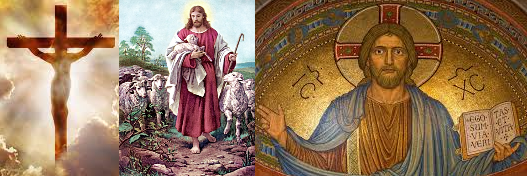
Who do you think Jesus is?

On Palm Sunday the crowds welcome Jesus to Jerusalem as the Messiah; and yet, they seem to be expecting him to behave differently to the way that he does.  They were expecting someone who would “rule the Jewish people during the Messianic Age and World to come“, and at a time that Israel was ruled by the Romans this would require their overthrow.

Every Thursday local clergy discuss the following Sunday’s Gospel, and this week one of the discussion points was whether the crowd who welcomed Jesus into Jerusalem was the same one who cried out for his crucifixion a few days later.  The arguments centred on whether people would have changed their minds so quickly.  The choices were broadly: “no they wouldn’t” and “if they were disappointed by the failure to overthrow the Romans…”; no doubt there are others too.

It certainly looks as though they didn’t expect the kind of Messiah that Jesus was, ruling by influence rather than by power, indeed, refusing to use power when the opportunity arose, rather allowing himself to be put to death rather than invoking the power of God.  Indeed,

So my question is: “What kind of Messiah do you believe in?”.

Richard Rohr writes that:

Jesus did not come to change the mind of God about humanity (it did not need changing)! Jesus came to change the mind of humanity about God

Over the years many people have had a view of God as somewhat like a medieval King; someone who it made sense to be afraid of, and to try and keep on the right side of.  Jesus came to tell us that God love’s us, and that nothing that we do can stop him loving us.


Bullying

Regardless of where we stand on Brexit, surely we can agree that there is a need to be civilised about the process?  Some of the leavers at present appear to think that threatening the EU will get them what they want.

It perhaps says something about British business; my (10 year old) experience was that what was increasingly valued was to decide what you wanted and to be as obnoxious as possible to get it, trusting that the other (weaker) party would give in, as something was better than nothing.  I suspect that this works for moderately large companies, so supermarkets can treat suppliers that way, but very few suppliers are big enough to treat supermarkets that way.

When it comes to Brexit, the question is which is the stronger party?  Those threatening the EU, or expecting them to change their mind at the last minute appear to think we are.

That said, I think the underlying assumption that we can bully our way into a good relationship is practically and morally wrong.

Reconciliation

I am reading the Archbishop of Canterbury’s Lent Book, and today’s chapter is about realising that God is not on your side against others; yes, God is on your side, but God is on the side of those we disagree with too.

With feelings running high over Brexit it is sometimes difficult to remember this, whichever side we are on.  And yet if we were all able to remember it, it might just make resolving the issue easier – as indeed it would in most conflicts.

You always have the poor with you

This morning we read Sunday’s Gospel and were struck by the full quote and context (see below) of the quote that politicians sometimes appear to use to justify not helping the poor (scroll down).  Of course the Bible has far more quotes about looking after the orphan, the alien (asylum seeker) and the widow, but here the quote is even being taken out of context!

You always have the poor with you, but you do not always have me.

Compromise

It is conceivable that I am speaking too soon, but it appears that yesterday we saw the possibility of compromise being considered by party leaders.

Whatever we may each think about the best approach for Brexit, I have a suspicion that politicians choosing a hard Brexit, or no Brexit will leave the country divided for a long time.  Given that that is the case, and that any compromise agreed will probably not be what either side in the referendum voted for, will it be the best way forwards?

Indeed, is Brexit one of those situations where a compromise does actually satisfy nobody?  As I understand it (and that means it may be wrong) in a much simplified fashion (and without going near the Good Friday Agreement) Brexiters want to regain the full sovereignty of Parliament and to make trade deals for the UK.  Remainers think that we would struggle to make advantageous trade deals, and would be better sharing sovereignty with a larger group of people.

As I understand it, all of the compromises remove the sovereignty of Parliament and the ability to make trade deals, but instead of sharing sovereignty give it away.

Which according to my analysis means that we have the choice between a compromise that gives no one what they want, or two options which are in danger of splitting the country further.

In the Church of England, major changes of policy require a 2/3 majority, hence the time it takes to vote through controversial (to some people) measures, like female bishops.  However, what this does mean is that when it happens, there has been much discussion about what the issues are, and compromises are found that mean that the 2/3 majority can be found.

Frustrated as I have been at times with the speed of progress in the Church of England, I do wonder whether taking the time to go through the process of trying to build a consensus wouldn’t be the best approach here, although it would obviously require a long extension.

The alternative appears to be politicians of all shades stating what the voters meant when they voted 52/48 without any evidence to support their position.

Aaaargh!

What do we do about old hymns – cont’d

I wrote yesterday on this topic having read part of a book in preparation for a discussion group.  At the group the discussion took an unexpected direction (good) and I thought it worth continuing the discussion.

Having asked what to do about old hymns we digressed onto statues of people who have fallen into disrepute (at least in some circles), sparked by the debates in Oxford about Rhodes.  Just as Brian McLaren suggested including comment about the, now unacceptable, hymn verses we thought that that approach would work well for statues – add an additional plaque explaining the circumstances.

We also discussed whether all the Bristol buildings funded by the slave trade should be pulled down, and thought this overkill.  What we didn’t mention, but I recalled afterwards, was that in Bristol there is the Slave Trail.  Whether this was created with this approach in mind I don’t know, but keeping the history visible, whilst explaining the context and problems with it seems a better approach to me than removing it and leaving future generations in ignorance of our less than perfect past.

Repent and flourish

A couple of Sundays ago, Lesley Shatwell preached at St Mark’s on repentance and what it means.

The  Gospel reading that day was from Luke, chapter 13, v 1-9. You can read the whole extract here but, basically, Jesus says: “unless you repent, you will all perish”. He then told the parable of the barren fig tree which was given a reprieve.

This is what Lesley had to say about this uncompromising message:

When I first read the reading, I couldn’t quite make sense of what was happening.  I had to read through a few times.  It starts when Jesus has been told about an atrocity which Pilate has committed.  He slaughtered some Jews when they were offering sacrifices to God.  My goodness, that has strong resonance for us today doesn’t it?  Muslims being gunned down when they were at prayer in New Zealand.  Perhaps Jesus overheard people trying to make their own kind of sense to a barbaric act because he tells us that those who died were no more sinners than anyone else.  They weren’t slaughtered because of their sin.

But then there’s his comment, “unless you repent, you will all perish as they did”.  That’s worrying, it doesn’t seem to make sense does it?  And it’s frightening.  On the one hand, people died in a horrible atrocity and they no more deserved it than anyone else does.  They were just in the wrong place at the wrong time.  But on the other hand, that could be our fate unless we repent.  Can repentance really ensure that we will avoid perishing, even in random acts of terror?

Same goes for the disaster when the tower of Siloam collapsed and killed 18 people.  A “natural” disaster, no one’s deliberate fault.  And “unless you repent, you will all perish as they did”.  Those people who died weren’t extra wicked sinners, they were just like you and me.  Oh Jesus, help me, I don’t even know how to repent?  What is repentance?

OK, time out!  Let’s press the pause button before we all disappear into the fiery furnaces of hell.

What does “perish” mean?  That’s straightforward at least, isn’t it?  It means “die”.  We are human, we do all die eventually.  We don’t know when, but it comes to all of us.  Some might have an untimely death, some may slip away peacefully after a long and happy life.  So I don’t think Jesus is saying, “repent and you will have a human life here on earth for ever”.  There’s something else going on.  Hum.  One of the reasons why people were flocking to be baptised by John the Baptist was because they thought the end of the world was imminent.  And tomorrow could be the last day.  It tends to focus the mind: better get ready quick before it’s too late.

But equally, who knows exactly what Jesus meant?  He might have been talking about perishing to this world so that we might rise to glory in the next.  I’m afraid you will have to consider that for yourselves because we could be here till Christmas with this sermon if I start tackling the idea of everlasting life with God in heaven.

Right, I’m ready to press the “play” button again.  Repent!  Repent!  Yes all right!

Repent or else fire and brimstone, perishing in eternal hell.  Yes, but how?

What is repentance?

Repentance is the translation of the Greek word “metanoia”, which means “a change of mind”.

Oh, so it’s that easy?  I just have to change my mind?  It can’t be so hard – particularly if I will avoid eternal damnation.  But you have to mean it.

Change your mind and do something to show that you have truly changed your mind.

Change your mind and turn to Jesus – now there’s an invitation.  Yes, an invitation, not a threat.  Change your mind and turn to Jesus.

What if all those things which have been holding me back, all those things which stop me from being truly me, all those things which I am ashamed of in my life, which worry me, which upset me … what if all that rubbish in my life perished?

Now: imagine, for a moment, you are living a reasonably contented life.  Things are ok, you get by most days.  There are some good things, maybe a lot of bad things.  But generally you find life is worth living.  It’s like you are a tree, growing in a vineyard.  Some days it’s quite pleasant, the sun shines, the birds sing.  And nobody bothers you.  Nobody asks anything of you.  You are just a tree after all and there are plenty of trees around in the world aren’t there.  Yes, there are days when the storms come and you are buffeted by wind and rain, but nobody pays much attention to you.

And then, out of the blue one day, the owner of the vineyard comes by.  Where are the figs?

Figs?  Who said anything about figs?  I didn’t know I was meant to be giving you figs.  I’m just a tree, leave me alone.  Don’t chop me down, that’s not fair.  Look, give me a chance – now I know I could give you figs, I will, but I can’t make them overnight.  I will give you the figs, especially if I get help from the gardener.

It’s one view of the parable.  Do you see what Jesus is offering us?  Repentance.  It’s not a threat, it’s an opportunity, an invitation to try something in a different way.  Of course, it could be tough, even if it’s in your nature to produce fruit, you will have to put some effort in.

But, what is it about your life that you would change?  Do you have any regrets?  Any sadness?  Any cherished hopes?  Within each one of us there is potential.  The potential to bear good fruit.  But we need the right encouragement and we need to want to unlock the potential.  Within each one of us there is something, a gift, and it would be a huge loss if we let it perish.  Maybe you have found the gift, the potential within you, maybe you are still searching.  But we do have the gardener on our side.  Jesus is ready to give us all the love and nurture we need to flourish and bear good fruit.

Repent!  Turn to those true things which bring life in all its goodness.  But be kind to yourself, all things in their own time.  Gently does it, fruit takes a while to ripen.  And remember, Jesus, the gardener is always ready to nurture and care for you.
What do we do about old hymns?

I have just been reading in preparation for a discussion group tonight, and one of the chapters challenges us about what to do with old hymns where the sentiments are no longer generally held.

In this specific case it was “All things bright and beautiful” and in particular the now mostly omitted verse:

The rich man in his castle,
The poor man at his gate,
God made them high and lowly,
And ordered their estate.

However, there are also long debates about the use of inclusive language in hymns (and the use of alternative lyrics) and even in modern hymns there is concern about some lyrics, for example:

Till on that cross as Jesus died,
The wrath of God was satisfied

from In Christ Alone.

I even recall a discussion between a chaplain and Carol Service organiser about the “theological soundness” of Little Town of Bethlehem:

O little town of Bethlehem
How still we see thee lie

Not terribly accurate then or now.

Indeed, so much so that 10 years ago or so alternative lyrics were suggested:

O sad and troubled Bethlehem,
We hear your longing cry
For peace and justice to be born
And cruel oppression die.
How deep your need for that great gift
of love in human form.
Let Christ in you be seen again
and hearts by hope made warm.

While morning stars and evening stars
shine out in your dark sky,
despair now stalks your troubled streets
Where innocents still die.
And Jesus, born of Mary,
Whose love will never cease,
feels even now your pain and fear,
Longs with you for your peace.

Amazingly and lovingly
Jesus the child has come
and, brought to birth through human pain,
makes broken hearts his home.
He comes to comfort all who weep,
to challenge every wrong
and, living with the weak and poor,
Becomes their hope, their song.

Words by Wendy Ross-Barker

The question however was: what should we do about it?  And the suggestion was that just ignoring the problem is insufficient.  We need to look back at the history, and why these things happened, and the theology that drove them to see whether we agree with it.

I do recall one of my theological college principals refusing to sing certain lines in hymns because he didn’t know what they meant – alternatively I also recall hearing of  someone who said they could sing the creeds, but couldn’t say them!

And when you are a vicar, what do you do when people complain about messing about with the words?

Aaargh!

Mothering Sunday

Today I chose the following reading (sometimes the lectionary allows a choice):

And the child’s father and mother were amazed at what was being said about him. Then Simeon blessed them and said to his mother Mary, ‘This child is destined for the falling and the rising of many in Israel, and to be a sign that will be opposed so that the inner thoughts of many will be revealed—and a sword will pierce your own soul too.’

Luke 2.33-35

It is a reading that I have tended to shy away from in the past because it felt to me as though it was a little disturbing (given that the alternative is the crucifixion what was I thinking?).

One of the OT options was Exodus 2:1-10, which tells the story of Moses very early life.

This year what struck me about both was the roller coaster nature of motherhood.  In one “the child’s father and mother were amazed at what was being said about him” one moment, and then being told “and a sword will pierce your own soul”.  In the case of Moses the roller coaster was even more extreme.  At his birth the joy of giving birth to a son mingles with the fear that he will be killed by the Egyptians.  At 3 months old the sorrow of abandoning him to the river mingled with the hope that this way he might survive.  Then the unexpected joy of becoming wet nurse to your own child.  And at 18 losing him again.

Two thoughts struck me about all this:

The first is that if we love we are doomed to suffer (not my original thought!) – I suspect that most parents know this – and therefore that Mothering Sunday, a day which has come to represent the love of a Mother, must also represent the acceptance of suffering.

The second that there is a roller coaster, and (barring death) we do not know where we are on the roller coaster (which reminds me of this story: https://www.the-benefits-of-positive-thinking.com/positive-taoist-story.html).

Temptation?

This year, for the first time in ages I did not give up chocolate for Lent.  This was partly because my consumption had significantly reduced, and partly because I preached on how giving up “little” things can distract us from more important changes in our life.

The interesting thing is that I have started eating more chocolate – at least until now!  It was perhaps a combination of tiredness and a special offer at the supermarket, but it also set me thinking that if it weren’t Lent I might have stuck to my pre-Lent guns.  What is going on?

I have to say that I am not sure, but feel the need to go back to my pre-Lenten ways.  Has anyone else found this odd effect of Lent?