Category Archives: Coronavirus

Taking the magazine online

The Coronavirus has put a stop to a lot of things, among them the magazine which we usually distribute thanks to the hard work of a lot of people who deliver them through letterboxes across the area. Obviously that isn’t possible so we have experimented with an online magazine and you can find the results here.

If this goes well, when we are through the pandemic we may well produce a printed one and an online one, perhaps with a paywall and maybe even adverts.

Let us know what you think and if you want to write a piece, email editor@badshotleaandhale.org


Mental health support in the lockdown

The current lockdown has the potential to cause many of us mental health problems. If you can, try to talk to someone about it. The Samaritans are available 24 hours a day on 116 123. You can also visit www.samaritans.org/

The NHS has a helpful page here and there is also advice for those in need of urgent support here.

The Church of England has some useful resources here.


Picture by Dyversions from Pixabay

Communion in the Parish during Coronavirus

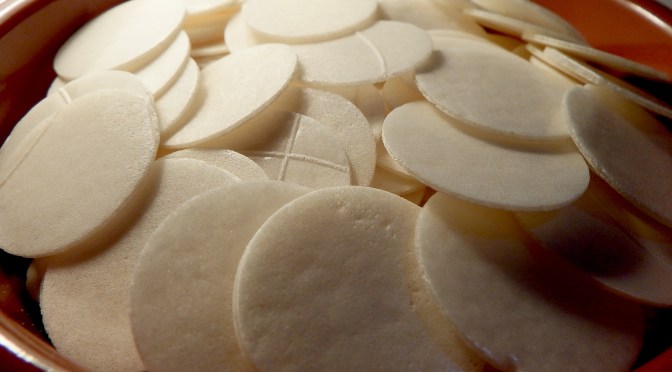
During the Coronavirus pandemic this parish will not be celebrating Holy Communion.

This will be difficult for many of us. Holy Communion is, for many, a vital part of worship – not just vital in the sense of ‘important’ but in the original sense of the word – ‘life-giving’ or ‘belonging to life’. We know that God is with us whether we share in Communion or not, but the sharing of the Bread and Wine helps us feel united with each other and with other Christians now, in the past and in the future, and it reflects our relationship with God.

Within the Christian Church, and within the Church of England, there are many different theologies of Holy Communion. It is not a question of which are right, and which are wrong, it is more a question of which matters are given greater priority.

Lesley and I believe that when we preside (note the choice of word, not celebrate) at Holy Communion we are presiding in an action undertaken by all the people of God who are present. When people are not present, for us it loses its significance. Consequently in this parish we have decided not to stream services of Holy Communion – which would be others watching us have Communion whilst not having it themselves. In fact, we will not be streaming any services (using streaming as a technical term to mean people joining a live broadcast), as our experiments to date have not been terribly successful. Instead we will continue to put pre-recorded material onto the web site.

This may not suit everyone and we understand that so we have a couple of suggestions to help until the current lockdown is lifted.

  1. There are streamed services on the web which include Communion and you can watch these.
  2. You can partake of Spiritual Communion

Spiritual Communion

During this time of not receiving communion we can receive Spiritual Communion.

Bishop Jo has written a paper on Communion during a pandemic:  https://www.cofeguildford.org.uk/docs/default-source/coronavirus/priestly-practice-in-a-pandemic.pdf?sfvrsn=bb330032_0 which includes the following:

The Book of Common Prayer instructs us that if we offer ourselves in penitence and faith, giving thanks for the redemption won by Christ crucified, we may truly ‘eat and drink the Body and Blood of our Saviour Christ’, although we cannot receive the sacrament physically in ourselves. Making a Spiritual Communion is particularly fitting for those who cannot receive the sacrament at the great feasts of the Church, and it fulfils the duty of receiving Holy Communion ‘regularly, and especially at the festivals of Christmas, Easter and Whitsun or Pentecost’ (Canon B 15).

It also contains a link to the Church of England’s advice on this:  https://www.churchofengland.org/sites/default/files/2020-03/Guidance%20on%20Spiritual%20Communion%20and%20Coronavirus.pdf

If you wish to discuss this with Lesley or myself, please give us a call.

Image by David Eucaristía from Pixabay

What has been happening in the Parish?

During the last 3 weeks a number of changes have occurred in the parish.

Priorities

Look after ourselves

At this time all of our first priorities is to look after ourselves and others – if we do not we may unwittingly spread the virus.

Look after others

We also need to look after others.  Many in the congregations will be over 70 or have preexisting conditions which mean that they have to self isolate, but even when self isolating we can look after others – and neither we or they have to be churchgoers to do it: https://www.theguardian.com/society/2020/apr/04/elderly-people-in-uk-set-up-support-networks-to-tackle-coronavirus.  We can also look after others by helping with shopping, or collecting prescriptions.  Farnham is organising this well: https://badshotleaandhale.org/2020/03/26/farnham-and-villages-helpline/, and there is no need for the churches to set up in competition, so if you have the time and are able, please consider joining in with that.  Here is some information on what this is doing: https://www.facebook.com/farnhamofficial/videos/222226172190384/

Wendy is building up a list of who is in contact with whom, so that we can identify anyone missed out.

Stella is acting as a contact for those who need help or are offering it, although this should be moving to the helpline as they are better resourced to manage this.

Worship

We are looking at ways to replace our worship.  A pattern is developing, and more will be done on this.

Things that have happened

The Standing Committee + Stella and Wendy are meeting Weekly to review the mountains of advice which is coming at us from the government, the national church and the diocese.

Our buildings are closed, but they are being inspected from the outside daily during someone’s daily exercise; from the inside weekly during someone’s daily exercise; and people who live locally have been asked to keep an eye out for anything unusual happening around them.

Alan & Lesley have both had the coronavirus (self diagnosed) since 16th March and have been self isolating, although neither of us has had breathing difficulties.  Alan is recovering and has been able to do a lot on the web; Lesley has got better, but is less able to do anything, and hasn’t answered many emails.

Image by Santiago Lacarta from Pixabay

A different way of experiencing Lent

Life seems very strange at the moment. Some of our parishioners are still working, some of them are working for the NHS and are working extremely hard so that the rest of us receive the care and attention that we need if we are ill. Many are suddenly finding that they have to work from home and others suddenly find themselves with no work. Those of us who are retired and over the age of 70 are being advised to self isolate especially if we have underlying health problems. None of us is supposed to be socialising; we can only go shopping for food or medicines and even if we go out for walks we have to keep our distance from all those we meet. As Archdeacon Martin said in the daily bulletin from the diocese of 31/03/20 “We are currently walking though uncharted territory. The terrain is rough, unlevel and hard to negotiate and the destination is unclear.”

To me the fact that all this is happening during Lent is making me feel that this year we are all experiencing Lent in a way we have never experienced before. We may not be fasting in the sense of giving up chocolate or whatever we usually “give up for Lent”. We are fasting in a completely different way. We are not able to take part in one of the Lent groups. We are not able to attend a church service. We cannot even go inside the church and pray privately. We are all experiencing the sense of deprivation, the sense of being without something that is precious to us. We cannot meet our friends. Many of us live alone and although we may not feel lonely in the way some elderly people who have no family and no friends feel lonely, we are experiencing a sense of isolation. It is also in a way quite claustrophobic and can cause a sense of panic as you wonder when this will all end. So it is a period of fasting but it is more like the experience Jesus had when he was in the wilderness. In a way we are all in a form of wilderness. We have never experienced anything like this before and it is frightening.

In amongst the fear and sense of isolation, there is goodness – people are communicating with each other, they are phoning or sending emails – checking that everyone is alright. People are offering to get shopping for neighbours and friends and generally being supportive. I am witnessing a sense of neighbourliness and caring that is growing. So out of that wilderness is coming love and caring.

In Alan’s sermon on Sunday he referred to the question of suffering. Jesus never told us it would be easy if we followed him. There was no expectation that we would be free of suffering. If people who were believers found themselves free of suffering and pain then everyone would become believers but for the wrong reason. They would only believe because of what they would gain. There is no love in that, no real indication of a real faith. It would not necessarily create a very pleasant world. Jesus taught us that we should love one another. Real love is not free of pain. When people suffer pain other people become more caring. So out of pain and suffering comes love and caring. God knows about pain and suffering and when we suffer, when we feel pain then God walks beside us. Maybe you have experienced this – I certainly have. I realise that I may be accused of over-simplifying the question of pain and suffering but I hope it makes you think about it.

Pamela Marsham


Picture by Arto Marttinen on Unsplash.

Take your anger to God

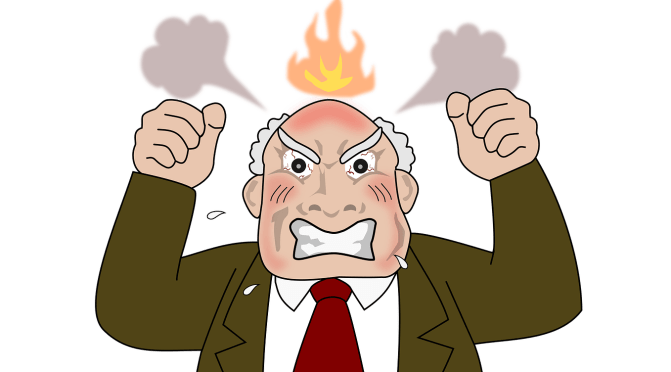
We could have predicted it – along the lines of the stages of grief identified by Kubler-Ross – but our nation is no longer in Shock (and denial and action and elation) at the implications of COVID-19. The newness of lock-down is fading and there are all sorts of signs that we’ve moved to the Anger phase: where frustration and irritation and anxiety come to the fore. When there is anger it can get directed almost anywhere – not just from Wuhan to Westminster – and, with more serious consequences, to our nearest and dearest at home and even within ourselves.

Might I urge that as Christians we take the anger to God? It’s significant that in the Bible’s handbook of prayers – the Psalms – the most common form of Psalm is the lament (approx. 1/3 of the whole Psalter!). A lament is a prayer that arises out of a situation of pain or injustice – individual or corporate – where the frustration and anxiety and anger is poured out to God. Take a look at Psalm 13, 25, 31, 86…  It might be prompted by a locked church or a wifi failure or a sick friend …  it doesn’t matter – God knows, God understands and God longs to hear about it from you.

Lament is not a pretty form of prayer – it’s usually anything but polite! If you have an empty room you could shut yourself in to voice it aloud; alternatively you can write a version of your own ‘psalm’. Whatever the form or circumstance, God longs to hear what’s real… and when our complaint is directed to God, then it can become an act of faith. Unworthy as we are, we turn to the God who creates and redeems, who alone finally sorts the mess!

Bishop Jo,
Bishop of Dorking

My Pet Peeve – Outrage

I was thinking that one silver lining to the Coronavirus cloud would be less outrage on social media and in the tabloids – something that I find really gets me down. I thought that we would be free of this for a while because we’d all be thinking about looking after each other. What I mean by outrage is the annual cycle: “Climate Change is clearly false as we have snow”, outrage about Easter Eggs (eg being in the shops too early), outrage that we can’t fly the St George’s flag around St George’s Day, summer holidays being spoilt for some reason (traffic, foreigners), peak annual outrage around Remembrance and poppies, outrage around Christmas being spoilt for some reason (probably secularisation or Muslim people).

Then when there is a lull in seasonal outrage, this gap is filled in by outrage about a particular group – the group changes slowly over the years but in recent decades has included: youths with hoodies, benefit scroungers, migrants, single mothers, gay people…

The thing is I was wrong. It is true that people have given the weather and Easter eggs a miss this year but it has been replaced by outrage about panic buyers (particularly toilet roll buyers), in addition to outrage about youths who are breaking the rules about social distancing, and also theft and daylight robbery with respect to hand sanitiser.

In my slightly delirious state, whilst beginning to recover from Coronavirus, I tried to unpick why my pet peeve is outrage. Why do I find it so intolerable?

I think there are two reasons. The first is it creates division. After 911 there was extreme outrage about Islamic extremism that caused such destruction and loss of life. But the outrage in turn caused hate crimes against anyone who looked like they might be Arabic in descent (I know of Christians with Indian descent who had to leave the States because of this). Outrage is a form of tribalism – to be in my gang you have to agree with me and share my outrage, or risk expulsion. Given that I have spent much of my life being the outsider, I find it painful to see a process that magnifies difference and exclusion.

The second reason is that outrage can be self-righteous; the rhetoric seems to be that the people who hoard toilet rolls are beyond the pale, scum of the earth, I would never do such a thing. There is a distancing once again. I immediately start thinking: “Really? Have you never done anything selfish? Have you never acted unwisely out of fear? Have you never fiercely wanted to protect your children like a ferocious mother bear?” Surely we are all sinners, none of us are clean. Sometimes I feel the outrage is suspect in “the lady doth protest too much” way – when we express outrage, are we covering up a fear of our own shortcomings?

Also, I find outrage so un-British. I am secretly proud of being part of a race who use understatement and wit to communicate. Whilst it is endlessly frustrating to my American and German friends, I am unapologetic. I love the jokes about Brits and our maximum anger level being expressed in the term “a bit miffed”. Outrage really messes this up for me. I like to think that civility is an important part of our national identity.

But of course, I am a hypocrite – I am fine with outrage when I agree with it – outrage about inequality or prejudice or cruelty is fair game as far as I am concerned. And outrage creates social change. The outrage against the behaviour of Harvey Weinstein has almost certainly redrawn the moral map about what behaviours are acceptable from a man in power towards women in without power, and that has made life a little safer for women.

In Galatians 5, Paul explains how to live well in the Spirit. Verses 18-23 are below, but I have edited out the debauch sins as I think they can be distracting:

The acts of the flesh are obvious: hatred, discord, jealousy, fits of rage, selfish ambition, dissensions, factions, envy and the like. I warn you, as I did before, that those who live like this will not inherit the kingdom of God.

But the fruit of the Spirit is love, joy, peace, forbearance, kindness, goodness, faithfulness, gentleness and self-control. Against such things there is no law.

I am open to the idea that there is occasionally a place for outrage in our society, but I also think it needs to be tempered with love, forbearance, kindness, gentleness and self-control. Let us all ask the Holy Spirit to grow these precious fruits within us during this stressful time.

Lesley


Picture by Pintera Studio from Pixabay