Your September Magazine is here

The September issue of the parish magazine is out now and you can download it below.

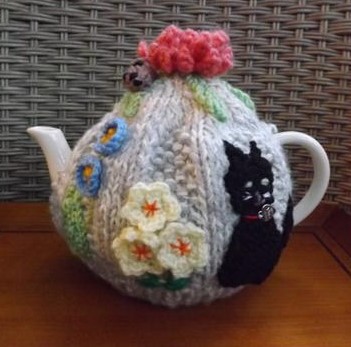
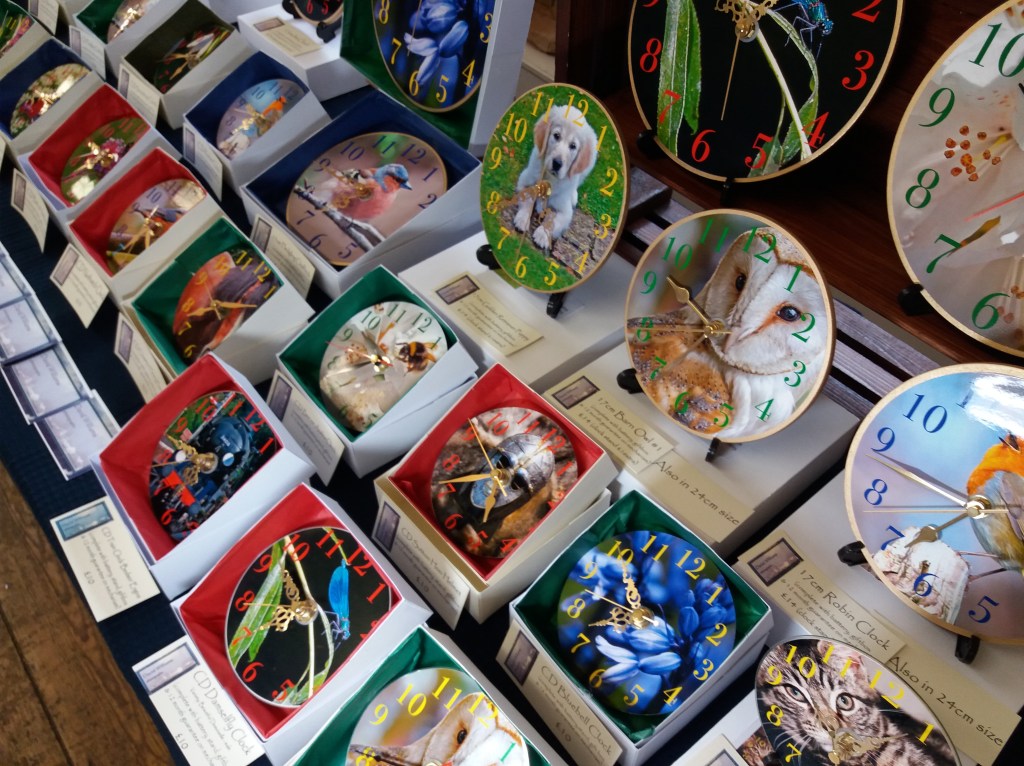
It’s a bumper issue which looks forward to what is going on this autumn. We start with a quiet morning for Creationtide at St John’s on September 2nd when Craig Nobbs will be leading us in reflecting about our care for God’s earth (see page 13). We will look at generosity and gratitude on two Sundays – September 10th and 17th (page 22) – and this month we start a series on exploring prayer, beginning on 20th when we go into Farnham Park to encounter God in nature (also page 22). Then there is our September craft market at St Mark’s on September 16th (page 48); Apple Day and Harvest Festival on 24th (page 12); and the Harvest Supper at St George’s on 29th (page 16).

It’s not all just about what’s on – among the articles you will find ones on home groups, autism, diversity, ordinations, why we hire out our halls, dog training and more, plus we are delighted to have the Badshot Leader right at the heart of the magazine, with information on The Kiln, the Community Garden and Aldershot Model Car Club.

All this plus local businesses who do so much to support our magazine by placing advertisements in it. Please do use their services.

Happy reading!

For the Beauty of the Earth

A Quiet Day for Creationtide

Craig Nobbs, a Licensed Lay Minister in the parish, is holding a quiet day on Saturday, September 2nd, in The Sumner Room at St John’s, from 9.15am for a 9.30am start, finishing at 12.30pm but with an option to stay on until 1.30pm for a guided meditation.
‘For the beauty of the earth’ – or so the hymn says. Yet the world burns. Communities are washed away. Wars scar the earth. The rich nations deplete the atmosphere; the poor and oppressed suffer catastrophe. Humankind’s stewardship of our beautiful God-given planet falls woefully short.
It’s time for Christians to act: to speak out about the climate emergency, and to see that climate action is a fundamental missional vocation. But how can we begin to start?
The programme for the day:

  • Morning Prayer
  • Reverence: what does God have to say about His planet and beyond?
  • Justice: what does God require of us now?
  • Action: Practical climate action for our mission and discipleship.
  • Midday Prayer
  • Option: If the weather is fine, you are welcome to join Craig in the churchyard for a guided hour of reflection and silence in God’s presence, to acknowledge the sheer scale of creation, and that we might see how reverence for the earth is part of our call to worship.
    Enquiries to LLM Craig: llm.craig@badshotleaandhale.org

Support for autistic people

A report on a talk by Alexis Quinn

How can we best support neurodivergent people, especially those with autism?

This was the challenge which author, speaker and campaigner Alexis Quinn took on in a talk at St Mark’s in July.

It is a challenge she takes on every day as an autistic person and the mother of two neurodivergent children and her talk was the product of lived experience and the latest research in the field of autism and support for autistic people.

At the moment support for autistic people is patchy if not entirely lacking in some areas.

Alexis looked at research into both children and adults with autism and the findings are alarming.

Children

Autism is the most common type of special educational need in schools, with the latest figures indicating that there are 182,493 autistic pupils in schools in England, the majority of them (73 per cent) in mainstream schools.

Teachers are therefore highly likely to have come across at least one autistic child but according to the National Autistic Society (NAS), only 14 per cent  of secondary school teachers have had more than half a day of autism training, and without appropriate teacher training, autistic children are twice as likely to be excluded from school. In fact, 74 per cent of parents said that their child’s school place did not meet that child’s needs and 54 per cent of children found that their teachers’ failure to understand them was the worst thing about school. And yet the Equality Act 2010 means that schools have a legal duty to make reasonable adjustments to things like the school environment and policies.

Adults

It doesn’t get better for adults. The disability employment gap (the difference between how many disabled people are in work compared to how many non-disabled people are in work) is wide, with around half of disabled people in work, compared with more than 80 per cent of non-disabled people. But the autism employment gap is even wider, with just 22 per cent of autistic people reported to be in paid work. There isn’t much opportunity for independence either with three-quarters of autistic people living with their parents, compared with 16 per cent of disabled people generally (ONS, 2021).

What is autism?

The NAS defines autism as “a lifelong developmental disability which affects how people communicate and interact with the world”. All people are different but generally, autistic people have difficulties interpreting verbal and non-verbal language like gestures or tone of voice, and they often have difficulty recognising or understanding other people’s feelings and intentions, and expressing their own emotions. This can make it very hard to navigate the social world. Alexis stressed that “when we take care of communication life is made a lot easier”.  For more details see box on page 19.

Autism and society

Alexis emphasised that autism is not an illness and does not need to be treated. It is simply a difference, part of normal human variation. However, this is not how society generally sees autism, and many people try to hide their autism by ‘masking’, suppressing behaviours which they may find soothing and mimicking others in order to fit in.

This seems to be especially the case for girls, but whatever gender, this is not healthy. Many autistic people feel the stigmatised and isolated, ‘othered’ by society and then they end up in what Alexis calls a ‘cycle of disconnection’. The results are alarming: 90 per cent of autistic people meet the clinical diagnostic criteria for anxiety and depression, and bullying and victimization leads to 61 per cent meeting the diagnostic criteria for PTSD. They are nine times more likely to die by suicide than neurotypical people and the average life expectancy for a ‘high-functioning’ autistic person is only 54. For a ‘low-functioning’ person that already low figure plumets to under 40.

Crisis

Why is this? Alexis herself masked and coped until a crisis point and this is common with autistic people. When crisis comes it can be impossible to mask or meet the demands of the environment. She had been a successful teacher and an international swimmer but once she needed help she ended up in a mental health and treatment unit. She describes her experiences in her book Unbroken, a terrifying description of a mental health system itself in crisis with little understanding of autism. What she thought was going to be a 72-hour rest turned into three and a half years in hospital, where she experienced sensory overload, restraint and seclusion until she took matters into her own hands and escaped to Africa. The book is an extraordinary and powerful read.

How to make a difference

Alexis now campaigns for better treatment for those with autism and challenges the way neurodivergent people are treated. She encourages people to think carefully about language which she describes as  “one of the most subtle but common forms of ableism…The language choices we make when talking about neurodiverse people can either maintain or challenge ableism.” Examples are: rather than saying someone is ‘suffering from autism’, we could talk about the ‘impact’ or ‘effect’ of autism, and rather than asking an autistic person “Why can’t you just…?”, we could ask “What can I do to support you?”.

These differences may seem slight but the cumulative effect of subtle hurts in language and the way people are treated can lead to increased marginalisation, bullying, poor mental health and trauma.

She is keen to encourage strategies to improve awareness of autism among non-autistic people which will not only improve the experience of autistic people but will also help lay the groundwork for a more accepting society.

Immediate steps

There are also lots of immediate steps that can be taken, especially in educational settings, including exit passes to leave classrooms if overwhelmed, quiet spaces to allow recuperation, uniform adjustments to reduce sensory discomfort and adjustments to classroom lighting and seating plans. These can go some way to reducing anxiety. Alexis explained that “when anxious the thinking brain — our executive functioning skills — can go offline and our emotional brain kicks in. We cannot pay attention, provide answers to a question, even speak, sit still or remain calm.”

She also outlined the importance of helping autistic children to report bullying and how schools can make this easier by, for instance, allowing autistic pupils to say what is happening by email or drawing, as communicating may be difficult.

Empathy works both ways

Finally Alexis pointed out that the burden of communication is usually put on autisic people. Both autistic and non-autistic people have difficulty understanding and ‘feeling’ each other because of their differing outlooks and experiences with the world but “empathy is a bidirectional phenomenon”, ie, it works both ways. Why is it that autistic people, the minority neurotype, are expected to do most of the adjusting? What can non-autistic people do to acknowledge and meet an autistic person’s desire for connection? Surely we can all develop new ways of relating?

What next?

There was time for questions after the talk with many people speaking from the lived experience of either being autistic or having autistic family and friends and there was a huge desire to carry on discussing ways of supporting each other. We are compiling a list of people who would like to be involved in some way and if you would like your name and contact details added, or to find out about other support or talks in the future, email revd.stella@badshotleaandhale.org

For more about Alexis click here.

Unbroken, learning to live beyond diagnosis by Alexis Quinn is published by Trigger Publishing.

Two ordinations – two curates reflect

We now have not one, but two curates in the parish! David Camp was ordained deacon on July 2nd at Guildford Cathedral, the day after Stella Wiseman was ordained priest, also at the Cathedral. Both are serving in the parish on a part-time basis.

Stella was ordained priest a year after her ordination as deacon and will continue her ministry here. As priest she is now able to expand that ministry and can baptise and marry people, as well as conduct funerals, and can also preside at the Eucharist.

Stella Wiseman

Stella reflects: “It is a real privilege, and a slightly scary one, to be an ordained priest here to serve the people in this parish, and I am grateful for all the support and love that has been poured out. The past few years have involved a lot of learning and this is not about to stop! In fact, I am always going to need to carry on learning – the more I try to learn the more I realise I know very little!

“One of the services I am learning to preside at is the Eucharist and this feels a particular honour, as this is central to our worship here in the parish. To be there recalling the immense generosity of God in Jesus, and the welcome which God extends to all of us in drawing us in to share in the bread and wine, which in some way is God’s presence, feels extraordinary and humbling. There is also a lot more to do physically than I ever realised during the Eucharistic Prayer and the actual consecration of the bread, so I probably have a look of extreme concentration as I do this!

“I am also trying to discern exactly what my ministry will look like. I feel very drawn towards the link between faith, creativity and inclusion, but working out what that means is a process and I am trying to listen to God to see what God wants of me and where God is asking me to step.”

David Camp

David says: “After six years of discernment and theological training, becoming ordained has come as something of a relief, having not come from an academic background. The path towards ordination was challenging and as you might expect filled with unexpected highs and lows, and not just on the academic front, but rather as a formation of my own theology as I sought to understand God’s activity in the past and the present and, perhaps most importantly, how God through us will shape the future. Christ’s body, the Church, is going forward into an unprecedented time of change. Final destination assured, but how do we best make use of the time given to us? Perhaps we should ask ourselves this from time to time. I find myself doing this more and more post ordination.

“I don’t think I was quite prepared for the sheer magnitude of the ordination event; in many respects it mirrored the Coronation. A cathedral setting, a beautiful choir, Bishop Andrew proclaiming to the gathered masses our calling to do our duty responding to God’s call. The clergy dressed in the robes of office all in their finery; for a simple lad it was all rather overwhelming. On reflection, perhaps it needed to be grand in order for me at least appreciate the weightiness of self-expectation.

“That may sound like a strange thing to say given our Lords revelation in Matthew 11:28-30 ‘For my yoke is easy and my burden is light’. And yet the process of unburdening I feel is not reserved for the congregation, but for the clergy as well. I don’t think burden becomes light just because you’re ordained. For me at least, it’s about learning to live with that burden of my expectation in communion with the body the church, so that it begins to feel comfortable, familiar or a lightness of spirit. Even Christ uses the term ‘My burden is light’, he doesn’t say you won’t be burdened, but that it will be light. Or perhaps bearable. If you have read Pilgrim’s Progress, the main character, Christian, embarks on a similar journey of faith weighed down with a burden of worry for his loved ones who have refused to join him on his journey. It’s only by the help of those good people he encounters that his burden becomes lighter. So, in essence I am most looking forward to journeying with you all, as we begin to discover what it means to have a lightness of spirit.”

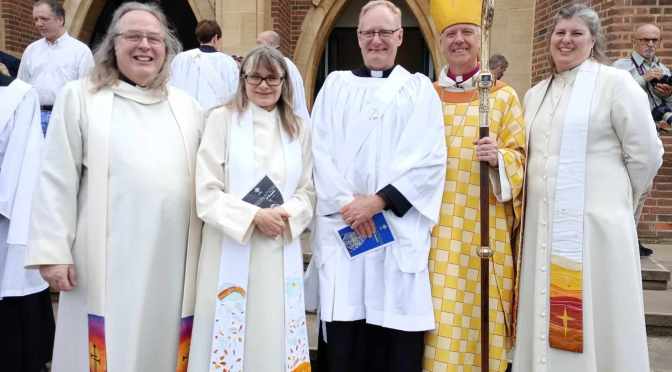
Pictured from left are Alan Crawley, Stella Wiseman, David Camp and Lesley Crawley at  David’s ordination

Pride

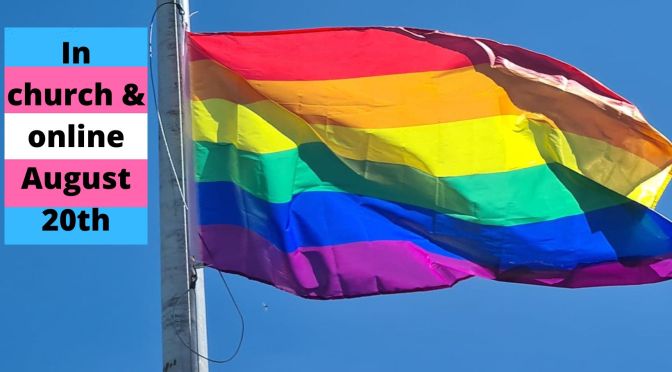
We will be celebrating Pride on June 23rd at all three of our churches and online, with special services, prayers and readings in support of and celebrating the LGBTQI+ community.

We are sometimes asked why we hold these services. Pride services are an opportunity to celebrate LGBTQI+ people in their fullness, to look back on strides toward equality, and to imagine a world where celebration and full inclusion is the norm, not an exception. 

The Christian response to LGBTQI+ people has not generally been one of welcome and the Church as a whole has not felt like a safe space for many people. In fact, Christians have used the Bible as a weapon and the church has contributed to the political, relational and spiritual dehumanizing of LGBTQI+ people.

Our support for Pride is not just a way of saying sorry for the Church’s harmful actions – some of which have led to the death of some of God’s beloved children – but also an opportunity to denounce oppressive practices and ideology while also becoming more fully human ourselves. For when we dehumanise others we reduce our own humanity.

In these services we repent of the past and we look with hope to the future. We stand with people who identify as LGBTQI+ and proclaim loudly that all people are loved by God and all people are welcome here. God is Love and we are all fearfully and wonderfully made.

Serving the Villages North of Farnham: Badshot Lea, Hale, Heath End & Weybourne