When inclusion means we have to change

Inclusion is a journey. Inclusion is not easy. Inclusion is worth it.

These are three conclusions I reached at the end of a weekend conference called ‘Being an Inclusive Faith Community’ at the beginning of the month.

It was a challenging and moving weekend at which a small group of us gathered in the warm and welcoming atmosphere of Woodbrooke Quaker Centre in Birmingham. I was the only non-Quaker in the group, which was led by Mark Russ, tutor at Woodbrooke, and Ruth Wilde, national co-ordinator of Inclusive Church, an organisation to which this parish belongs.

One of the first lessons of inclusion in a faith context is that the light of God shines in everyone, and we had this written up in the room in which we met, alongside other guidelines drawn from Quakerism including the belief in true equality and that Quakers seek to follow ‘the right way, not the popular way’.

These tenets are key. We probably think we are all lovely and welcoming and never exclude anyone, but when we take a deeper look we can discover that not everyone is as included as we might think. Changing that is an ongoing process and can meet opposition, not least in ourselves. For if we genuinely welcome everyone in, we will welcome in those we don’t understand, those we don’t like, those we don’t approve of, those who challenge us. Heck, we might even have to change.

There are several exercises I would like to try out in the parish following on from the weekend. One of them is to make us look at our own privilege and how we unconsciously or otherwise make it harder for others to feel truly accepted and valued. Are there people in our churches who feel they have little to give because of their background, illness or disability? Are there people who are not listened to because they find it hard to express ideas or because no-one thinks to ask them? Are there people who do not come into church because they believe they would not be welcome and if so, what have we done to make them feel like that? What barriers are we putting up?

I think that listening to each other’s stories and our true, lived experiences is key here, and not just listening but acting on what we learn. So if someone says that they feel left out or unwelcome, ask why and genuinely listen. If someone says they are afraid of something, or overwhelmed by it – too much noise perhaps – what can be done which also allows other people to express themselves? We are not looking to become some lowest common denominator which seeks to please everyone and ends up pleasing no-one, we are looking to become a radically welcoming community where everyone’s gifts and voices are heard.

It’s not easy and we will get it wrong time and again. There were times even in a group committed to inclusion, as we were that weekend, when we found it hard to understand each other. Sometimes it can be too hard. Sometimes genuine listening and being prepared to accept that we have to change is a step too far. It is possible to exclude ourselves.

I think there is a good example of this in the story of the prodigal son (Luke 15: 11-32) which ends with the younger son, who has previously rejected his father and the life he lived with him, coming back and being welcomed by his father with open arms and a party. This understandably upsets the older son who refuses to join in because he has dutifully stood by his father, worked hard and as he says, never been given so much as a young goat to kill so that he can celebrate with his friends. The father replies “Son, you are always with me, and all that is mine is yours. But we had to celebrate and rejoice, because this brother of yours was dead and has come to life; he was lost and has been found.”

I hope that at this point the elder son came in to the party, welcomed his brother back and maybe found ways of getting along with him, even learning from him. We believe we have a God who is worth sharing so we must share and celebrate with everyone, and we must be prepared to change in following the radical welcoming God who will never give up on any of us.


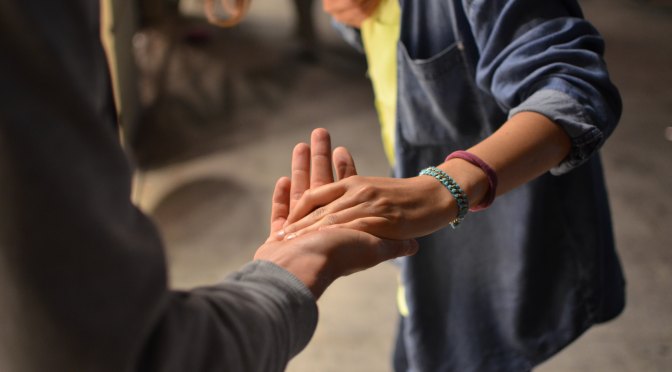
Picture by Rémi Walle. Unsplash.


Makeovers Second Thoughts

Yesterday I posted my thoughts on makeovers.  Whilst I still stand by what I wrote then, today I want to add to it, because I think there is something about motivation that is worth exploring.

The Bishop of Gloucester started a campaign in 2016 called Liedentity which was looking at the impact pressures on body image were having on young people.

As a society we seem to becoming more concerned with image.  Not helped by the use of Photoshop.  If the purpose of a makeover is to “compete” with this then at one level I would want to say that it is unhealthy.  If we recognise that our identity comes from God, like Justin Welby, then striving to make ourselves something else isn’t helpful.  However, it is a tough ask to require people not to do things which will make it easier to find employment, or get paid more, or make them feel more confident.

The danger, perhaps, is if after all the effort it fails to have the desired impact.

The motherliness of God

Sunday, March 31 is Mothering Sunday, and in our services that day we will celebrate mothers and others who care for us, with posies for everyone.

Mothering Sunday is thought to have begun in the 16th century when, on the fourth Sunday of Lent, people would return to their ‘mother church’ – that is, the local parish church or the church in which they had been baptised, or the nearest cathedral. The practice also began of allowing servants to return to their families on that day so seeing their mothers as well as their mother church.

Lesley Crawley comments: “On Mothering Sunday we celebrate mothers and those who care for us, remembering and praying for our own mothers. We also know that this day can be a difficult one for those who have lost their mothers, for those who have lost or cannot have children, and for those who have not had a good relationship with their mothers, and we offer them our support and prayers too.

“God is usually referred to as ‘father’ – in part a reflection of the time and patriarchal culture in which the Bible was written – but there are certainly references to the ‘motherliness’ of God in the Bible, such as this one in the Book of Isaiah: ‘As a mother comforts her child, so I will comfort you’. Christians believe in an all-loving God who loves us even more than a human mother could. Please do join us on March 31 at any of our services and celebrate and receive this love.”

Click here for some practical ideas from the Church of England for celebrating Mothering Sunday.

The altar frontal at Chelmsford Cathedral made by Creators (Cathedral School youth group). Picture by fourthandfifteen (www.flickr.com/photos/chelmsfordblue/)


Do looks Matter?

Strange things happen to vicars!  Today I got a call from a TV production company asking whether I would publicise their search for people to take part in a makeover TV programme (flyer above).  There have also been other times I have had similar requests from TV companies. I agreed to do so, and don’t regret it, but it did set me wondering about the current desire for makeovers.

With most questions of ethics there is a line somewhere that should not be crossed, but where does this lie when it comes to self presentation?  Or is there no line?

Might it be a question of taste, or might it be about intent?

When I started writing this blog I thought that there was a line, but as I write it I am finding it very difficult to draw it.

Take plastic surgery; my initial reaction was that there is a difference between someone who needs it because they have been badly burnt, and someone who wants to look prettier.  But now that seems like prejudice; why shouldn’t someone choose to look prettier?  I am finding it difficult to find a rule which differentiates one case from the other.  This is possibly because the only difference I can see between them is one of degree.

There are perhaps other arguments concerning the use of resources, but I suspect that most people would agree that there are some people who should receive this – so where is that line?

As part of my Lent discipline I am reading The Way to Love, and the passage I read today challenged me to see people, because only if I see the real person can I love them; if I do not see the real person then what I am loving is what I get from them, and when I stop getting whatever it is I will stop loving them.

Perhaps our attitude to makeovers is also about how well we see the person.

Car inventor’s grave restored at St John’s

One of the most famous graves in the churchyard at St John’s – that belonging to the motor vehicle inventor John Henry Knight – has been restored.

The grave dates from 1917 and had fallen into disrepair so we sought and received the go-ahead from John Knight’s descendants to repair the monument.

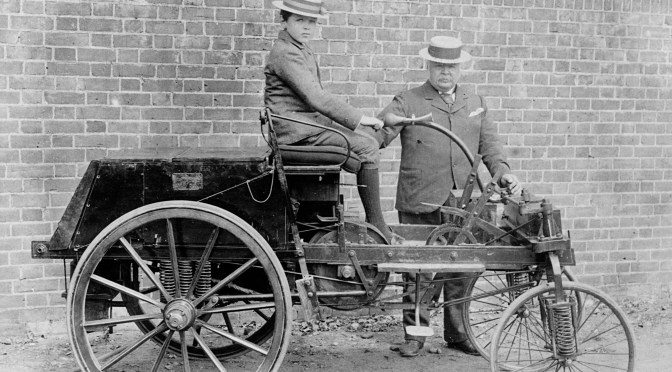
John Henry Knight, who was born in 1847 and lived in Weybourne House, Weybourne Road, invented one of Britain’s earliest petrol-powered motor vehicles. In October 1895 he also went down in history as one of the first recipients of a motoring fine when he and his assistant James Pullinger were found guilty at ‘Farnham Petty Sessions’ in Farnham Town Hall of using a locomotive without a licence and of not having a red flag carried in front. James Pullinger had been stopped while driving the vehicle in Castle Street, Farnham, earlier in the month. The car can now be seen in the National Motor Museum, Beaulieu.

John Knight pleaded not guilty on the grounds that the vehicle was too light to come under the Traction Act, but he and Pullinger were both found guilty and received a fine and costs. After that, he ran the vehicle on a private road but even then was nearly caught by a policeman hiding in a hedge. John Knight stated afterwards in his Recollections that this was “probably the first police trap on record”.

John Knight was responsible for several other inventions, including a steam-powered hop-digger, a brick-laying machine, a grenade-thrower, a radiator and a ‘dish lever’ for tilting plates when carving meat. Appropriately, given his motoring brush with the law, he also invented wooden vehicle tyres and a speedometer.

John Knight had also built a steam carriage as far back as 1868 and drove it on the roads around Farnham. According to contemporary writer William Fletcher this could carry three people at up to eight miles an hour and “easily mounted the hills in the neighbourhood of Farnham”, though John Knight himself admitted that “breakdowns were frequent”.

Lesley Crawley commented: “John Henry Knight seems to have been a colourful and clever man who was always using his ingenuity to create something new and solve problems of the day. Everyone in the parish has the right to be buried in our churchyard and everyone is equally special and equally loved by God. I find it humbling to think of all the people who have been associated with the church over the past 175 years and who will be in the future. The church is for everyone from the most eccentric inventors to the quietest passers-by.”

The grave.

Weybourne House 1Weybourne House where John Henry Knight lived as a child.
Pictured top: John Henry Knight (standing) with his vehicle in 1895. Picture courtesy of the National Motor Museum, Beaulieu.

Inspiring vision and pathways to prayer

Lent is as much a time for taking up new habits as it is for giving up old ones, and one of the habits we are encouraged to develop is that of prayer.

Sometimes we need new ways into prayer and one such is being offered this Lent at St John’s on a Wednesday evening from 7.30pm – using the visual arts to provide inspiration and pathways to prayer.

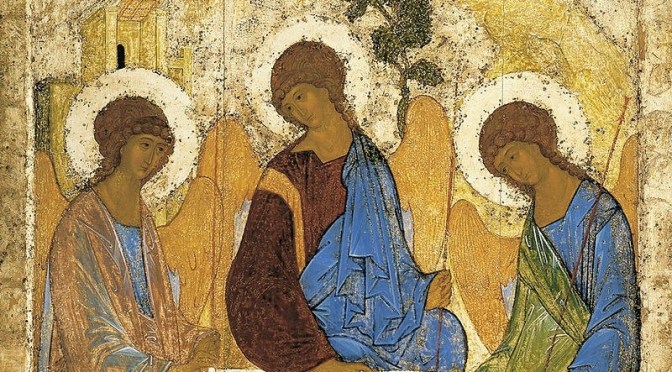
The first was Wednesday this week, when a small group considered ‘Prayer and the Trinity’, meditating on the painting Holy Trinity by Rublev, reading a passage from Paul’s letter to the Colossians (chapter 1, vs 3-14) and considering the creator, saviour and inspirer – Father, Son and Holy Spirit.

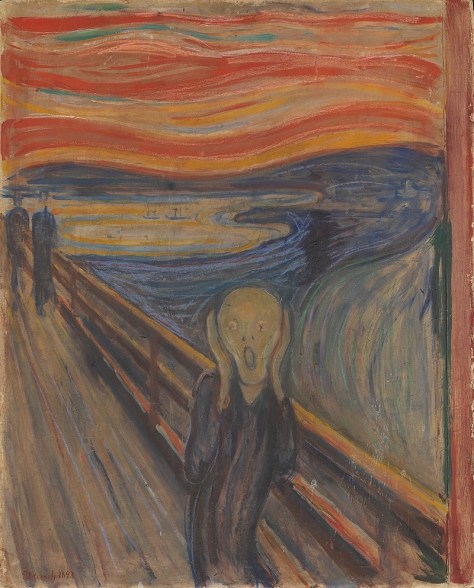
Next Wednesday, we will look at Prayer in Challenging Times and the painting The Scream by Edvard Munch, and in subsequent weeks Prayer and Discipleship, and Caravaggio’s The Call of Levi; The Joy and Excitement of Prayer with The Visitation (Mary and Elizabeth) from the Church of the Sitio, Suchitoto, El Salvador; and finally Repentance and Forgiveness with Rembrandt’s The Prodigal Son.

Come and join us and find new ways in to prayer through art.

the scream

Pictured above: The Scream by Munch

Pictured top: Holy Trinity by Rublev

What is the heart of your faith?

I have written about this before, and will no doubt write about it again, but it is a subject that keeps returning in my reflections.

I believe that whatever questions we are asked, once we can no longer answer the mythical 2 year old’s “why”, we will each eventually come to a common answer for ourselves.  This works for people who have a faith, and for those who have none.

Not only do I think that we will reach that common answer for us, but that once we have discovered what that common answer is we can then predict our answer to many different issues of the day.

I also believe that it is this which causes so many of the differences between Christians.  For example, if at the heart we believe that “God loves everybody” that will lead to one set of conclusions, whereas if we start from “the Bible is the inspired word of God” it will lead to another.  I am not here saying that people who start from different places do not believe the words of the other place, just that which takes priority determines a number of outcomes.

So – what is at the heart of your faith?  If I were to keep asking why after every answer you give, what do you get when you no longer have an answer?

An offer to everyone of healing and wholeness

There will be a service of healing and wholeness at St George’s this Sunday (March 17), at 10am, where everyone will have the chance to receive prayer and anointing with oil.

Healing and wholeness are not just about physical recovery. Lesley Crawley explains: “During his lifetime Jesus came alongside people, had compassion on them and healed them. Christians believe that in order to be whole we need to be at peace with God, with ourselves, with other people and with creation.

“Healing and wholeness can be about forgiving ourselves or forgiving others; they can be about moving from a place of denial to one of acceptance; they can be about finally finding peace of mind or finding the strength of spirit to overcome problems that have dogged us for years. Healing and wholeness are for everyone, for we worship a God of love who wants the very best for every person who God created.”

Come and join us at St George’s on Sunday at 10am.


Picture by Myriams-Fotos on Pixabay.

What is Church For?

I remember over 35 years ago challenging the Provost of Chelmsford Cathedral about the proposed re-ordering, renovation of the organ, and creation of a choir endowment.  This was a substantial amount of money (I can’t remember how much) and I questioned whether it would be better spent on the poor.  His response was that for some people it is the architecture or the music that first draw them to church; at the time I think I was content to let this past.

However, this leads to the question of whether the relief of physical poverty should take precedence over spiritual poverty or vice versa.  Maslow’s hierarchy of needs clearly suggests that for an individual physical poverty has to be dealt with before spiritual poverty, but is this true for society?

Maslow's_hierarchy_of_needs.svg

The more I think about this the less sure I am.  I can see a case for saying that everybody should be raised up at the same rate, but I can also see a case for wondering whether, if some are raised further up the pyramid, it might speed up the rate at which others climb it.

Now, I accept that this is slightly different from the question about whether church money is better spent on churches or people, but not perhaps that much.

The other issue is where the money comes from; whether we like it or not there are large sums of money available for buildings which aren’t available for poor people (eg the Heritage Lottery Fund – whatever else you may think of that).

Different people respond to different issues in different ways.  I know of churches where people will give to the fabric fund rather than the general fund; and if any parish priest were to suggest closing a church…

For me the question boils down to whether it is effective (pragmatist that I am).  And I don’t know the answer to that.  Where do you stand?


How do people come to church?

Last night I watched the latest episode of Fleabag, where the title character goes to church because she fancies the priest, whilst not believing.

I wonder what your take on this is?  I am quite used to the fact that people initially come to church for all sorts of reasons and I don’t have a problem with it at all.

In fact I know a bishop and a priest who both started going to church for two reasons:

  1. To prove that it was all wrong
  2. Because they fancied other people who went

Having got there they discovered there was more to it and stayed.

Church is not a holy huddle for the perfect (OK, so I’m not a Calvinist), indeed my training incumbent used to say that every church should have a big notice over the door saying “sinners only”.  People come to church for all sorts of reasons and that is good.

Serving the Villages North of Farnham: Badshot Lea, Hale, Heath End & Weybourne