Coronavirus and the church

It has been a distressing start to the year. We are facing a pandemic and what does that even mean? What impact is it going to have on our lives? Is one of our loved ones going to die? Are we going to die? What do we do? Do we cancel things? Do we stay at home? Will we get cabin fever? How do we keep each other safe?

It is interesting how each of us thinks differently about this pandemic. Some people have looked to the past – we didn’t hoard for SARS or Bird Flu, why do we need to do so now? Some people have looked at the present – it is only 5000 people in the UK who have this out of a population of nearly 70million, what is the problem? Some have looked to the future – if the number of cases are doubling every two days, then in a month everyone in the UK will have it.

Our personalities are different, and how we evaluate truth and who we look to as authorities also differ. Some of us we grew up in households where we were the ones who had the role of keeping a level head and not panicking – we tend to downplay everything. Some of us grew up in houses where we didn’t feel safe and this threat keys into that, we might be worriers. Some of us look to older, wiser people as authorities, others look to scientists, others to our friends or family.

Over the weeks, some things have become clearer. We can’t contain this virus – we are just trying to delay it so that the hospitals are not overloaded. A lot of us will therefore get sick – probably 60-70% of the population. This might be so slight that we don’t notice or we might be very sick indeed. If we are older or have a chronic condition then we are more likely to die – very sobering if you find yourself in that category, as I do. We also know this virus is going to be part of our lives for months – probably a year.

It has made me wonder how do we do church in these times. Already we are changing things. We are no longer sharing the peace, and yet we need peace and unity as Christians. Jesus was a healer – he touched people, even the untouchable, even those with the feared and highly contagious disease of leprosy. For some, the act of hugging each other on a Sunday is a form of healing, compassion and love. We are no longer sharing the common cup – the greatest symbol of unity that we have, we are no longer passing round the common collection plate, the symbol of us holding our money and resources in common. We are offering less hospitality in the form of coffee and tea – our symbols of God’s grace that he pours out on us and we in turn pour out to the world. Also, if there are only 50% of us there on a Sunday then how do we do Communion?

The answer is we will find a way. We will find safe ways of being hospitable, we will find ways of showing love and compassion and unity. Some ideas so far are that we will ask people to tell us if they are self-isolating and we can then ring them up and chat. We can get a buddy system going. Some of us can use technology to continue to grow in our faith and link up with others to discuss books that we are reading, or we can use prayer sites such as these:

https://pray-as-you-go.org/

https://www.24-7prayer.com/dailydevotional

https://www.churchofengland.org/prayer-and-worship/join-us-daily-prayer/todays-prayer

https://www.sacredspace.ie/

https://www.bbc.co.uk/programmes/b006qnds

https://www.bbc.co.uk/programmes/b006wzfs

Alan and I have lots of good books on faith that can be borrowed and we will put more articles in the magazine and more items on the blog – https://badshotleaandhale.org/blog/

Of course, we will be following government advice about delaying the spread of the virus and ensure our services and events are compliant with this.

A more difficult thing to think and talk about is the chilling message Boris Johnson gave us; “Many more families are going to lose loved ones before their time.” If 60% of us get this illness and the death rate comes down to 1% then that is about 40,000 people will be killed by the virus over the next year in the UK. Of course, no one at this point knows the fatality rate or the percentage of the population who will be affected, these are just best guesses. To put the numbers in context, about 500,000 people die each year in the UK and so if the numbers are correct, it is an 8% increase. We are very poor about talking about death – it is the ultimate taboo, but perhaps we need to get better about thinking and talking about it, after all it will happen to all of us eventually – with or without the pandemic – and cancer and heart disease are much more of a threat than the coronavirus for most of us.

Finally, there is the old question “Why would a God of love allow something horrible like this to happen?” The reality is that life is not easy for anyone: relationships break down, people get sick, people lose their jobs, loved ones die, not one of us gets through life unscathed. For us to be resilient, we must accept this reality. We might not like it or understand it, but we must accept it, as it is certainly true. I believe it is part of creation; the chaos and uncertainty allow the evolution of life and gives us freewill. If volcanoes had never erupted then beautiful landmasses like Hawaii would not have been created. Changes in cells may cause bad things like cancer, but they also created us in all our uniqueness. As humans have the capacity to be loving but also not loving, hurting others, and without that we would be robots.

Jesus never promised us an easy life – and it is writ large with him dying on the cross. Instead, we are promised life in all its fullness – a rich life where we have meaning and purpose, where we achieve good things as we seek the Kingdom of God, where we form loving relationships with others. In these uncertain times let us hold onto this calling and allow love and compassion to guide us.

Lesley


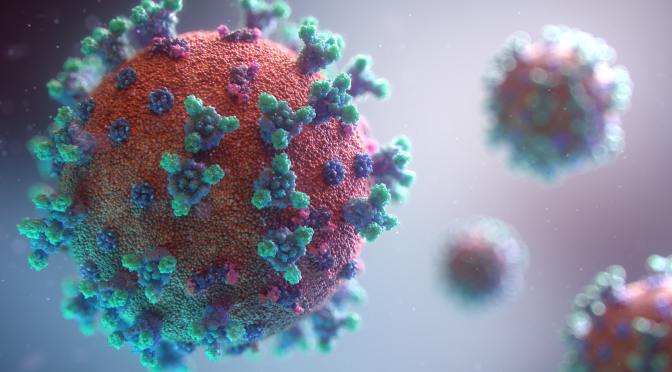
Picture: New visualisation of Covid-19 by Fusion Medical  Animation on Unsplash.

‘Let us remember that we are in this together’: advice from the Archbishop of Canterbury

The Archbishop of Canterbury has written the following piece with advice on how to approach the coronavirus pandemic:

“As we continue responding to coronavirus, a lot of us are wondering how we can walk in faith, resist fear, and support those who are most vulnerable.

The first thing to say is that following the advice of experts – especially about washing our hands regularly and self-isolating if we have cold or flu symptoms – is a really important place to start.

But what else can we do? Well, the thing about having hope, faith and courage is that although they are gifts from God, we can do our bit to nurture them.

We can take some time to sit quietly and pray, letting God know about those things that are on our hearts and minds. When we do that, we make that connection with God that nourishes and sustains us.

We can pray for those who are physically vulnerable. Those who are financially insecure and worried about needing to take time off work. Those who live in countries without public healthcare systems. Those who do not have family or friends and are facing this situation alone.

We can pray for healthcare workers and political leaders who are responding to this crisis and bearing the incredible responsibility of trying to keep us safe.

That brings us to resisting fear. One way to avoid being overwhelmed by fear is turning our attention to helping someone. Is there a person in your life, or your community, that you could call on the phone and see if they’re okay? Maybe it was someone that you prayed for?

Perhaps they can’t get to the shops – could you pick up some groceries for them? Perhaps they are self-isolating and feeling lonely – could you call them on the phone and see how they are?

If you have some spare income, or some spare food, could you donate to your local food bank?

Let’s remember that we are in this together. Let’s look after ourselves and our communities, gain courage from each other, and walk together in hope and faith.

As it says in Psalm 46: ‘God is our refuge and strength, an ever-present help in trouble.'”


Coronavirus picture by Vektor Kunst from Pixabay

Celebrations for Hannah have been postponed

To all of you who had planned to go on Monday evening to St James, Elstead, to celebrate the Institution of our lovely former curate Hannah Moore, please note that the Institution will be a small private one and there will be a celebration at a later date.

Here is a message from Bishop Jo, but before that, here is a message from us all to you Hannah. We wish you every happiness and blessing in your new role and our prayers are with you. Elstead, Thursley, Shackleford and Peper Harow, you have a gem coming to you!

“Bishop Jo is very sorry to announce a change of plans in relation to the Institution of the Rev’d Hannah Moore and the Licensing of the Revd Delia Orme on Monday owing to the corona virus. Although Hannah will still begin her ministry from next week, the celebration of new ministry in Elstead, Thursley, Shackleford and Peper Harow will happen at a later date when circumstances permit. In the meantime, all regular church services continue as normal and clergy seek to be available pastorally to those in need, in person or by phone, adapting as necessary for the sake of protecting those who are vulnerable or anxious at this time.”

Invitation to hear about plans for St John’s – postponed.

Please note, this has been postponed. Look out for a new date later in the year.

Come and hear about the ambitious plans to create a community hub and café in St John’s Church, at an exhibition on Saturday, March 28, at 3pm and 7pm.

The church is going to be developed so that it is not just a place of worship but a centre designed to meet some of the needs of groups in the community, including people with learning difficulties, those with dementia, young people wanting a place to go outside school hours, and those with issues affecting their mental health. There will also be a soft play area, office space and flexible areas for groups to use.

The church has carried out extensive research into what is needed and is working with groups and individuals, including the county, borough and town councils; the local clinical commissioning group; and charities, particularly Post19 which supports young adults with learning difficulties. Plans will be announced formally at a launch at the church on Saturday, March 28.

Lesley Crawley is leading the development of the new hub and café. She said: “We know that there is a real need for a place where people can meet both formally and informally, in groups and organised sessions, or simply by dropping in at the café. We are holding a public launch for the plans for the new hub on March 28 so that everyone can see what will be happening. Please do come and join us.”

Please note, plans for the launch are going ahead at the moment but obviously we will follow any advice from the Government and Church of England about gatherings during the coronavirus outbreak.

Drop us an email or leave a comment to let us know if you are coming and which session – 3pm or 7pm.

Guest post: Thank God for my trans Friends

Recently Mark Russ, a Quaker theologian who is also a tutor at Woodbrooke, Europe’s only Quaker study centre, posted his thoughts on transgenderism on his blog Jolly Quaker. Transgender people continue to be among the most vulnerable and marginalised in society and many of us in the church, even in an inclusive parish such as Badshot Lea and Hale, have not had the opportunity to consider how being transgender might fit with theology. Obviously, Mark writes from the perspective of being a ‘Quaker-shaped Christian’ as he describes himself, but his thoughts are relevant far beyond the Quakers. Here then, with Mark’s permission, is his post.

Within the British Quaker community, a painful conversation/debate/conflict (depending on your viewpoint) centred on the inclusion of trans and non-binary people is increasingly rising to the surface. As I see it, a big part of the disagreement is where we start from. I have recently heard some Quakers speak from a starting point of the safety of cis women, the safety of children, and the safety of lesbians. I want everyone to be safe – this is something all Quakers can agree on – but I think this is an extremely problematic starting point, as it treats trans and non-binary people (particularly trans women) as an inherent threat to the safety of others.

The Quaker tradition as practised in Britain is built on the valuing of individual religious experience. It has always valued the inner life at least as much as the outward life. It involves trusting that when Friends share their inward lives, they are speaking the truth. The starting point for any discussion referring to trans Friends should be an affirmation and celebration of their identity, saying ‘we believe you, you are who you say you are, and we love you’. I am open to then discussing ‘so what implications does this have for x y z’, but a starting point that involves implicitly saying to trans Friends ‘you are lying/deluded/wrong about who you are’ and ‘you are a threat’ undermines the theological bedrock of liberal Quakerism.

Sadly, this conversation/conflict is not going to go away any time soon. For me, this means it’s important to start thinking theologically about trans inclusion. As I see it, the future of Quakerism involves the full, affirming and loving inclusion of trans and non-binary people, or it doesn’t have much of a future at all.

(I should add two things: 1) it’s not as if trans and non-binary Friends have yet to experience being included and loved by others in the Quaker community. Trans and non-binary Friends have been around for a long time (such as the Public Universal Friend). This conflict appears to be a recent phenomenon. As such, I don’t think it compares to previous conflicts within the Quaker community, or that such comparisons are helpful; 2) that the inclusion of trans Friends needs to be defended in the first place must be very painful for trans Friends. No one’s identity should be up for debate.)

Towards a Quaker theology of trans inclusion

So I’ve already noted two things that go towards a Quaker theology of trans inclusion: 1) the valuing of that which is inwards at least as much as that which is outward; 2) and the trusting of Friends to speak of their inward experiences truthfully.

I’d like to add a third: in faithfully expressing who they know themselves to be, trans Friends enflesh the truth that a Spirit-led life leads to a reorientation, renewal or discovery of identity.

I was struck by the words of poet Jamie Hale in The Friend (27 September 2019):

The trans body is explicitly queer. It’s visually different. It becomes a statement. It challenges the simplicity of sex categorisation. You look at my body and there isn’t really anywhere to put it.

I recently wrote about how our whole lives testify to something. Jamie’s comment made me think about the powerful testimony of simply being who you are, and how this testimony may be particularly visible in the lives of trans people. Trans Friends let their lives preach simply by being themselves. In the changing of names and the changing of bodies, they incarnate an important perspective on identity that can be found in both the Bible and the Quaker tradition, that who we are born as is not necessarily who we are or who we will be.

(Of course it is not incumbent upon trans people to be ‘explicitly queer’. I wouldn’t want to suggest that trans people who choose to keep their gender history private should do otherwise, or have a less valuable testimony for doing so.)

We are not who we were, or who we will be

Changing names is not so unusual. Many people change their surname after marriage, and I’ve known several couples who’ve chosen an entirely new surname to mark their partnership. I known both cis and trans people who have changed their forename/s. In each case, a change of name says ‘this new name better reflects who I am’. This is something we see in the Bible too. In the Bible, a name is rarely arbitrarily given. A name describes who a person is. If a person’s life changes significantly, their name might change too. After the death of her husband and sons, Naomi (whose name means ‘pleasant’) chooses a new name – Mara (meaning ‘bitter’) (Ruth 1:20). After Jacob wrestles with an angel, he is given the name Israel, meaning ‘the one who strives with God’ (Gen 32:28). Sarai and Abram, upon receiving God’s promise to be the God of their offspring, are renamed Sarah and Abraham, Abraham meaning ‘ancestor of a multitude’ (Gen 17:5).

The name we are given at first, may not be the right name for us in the long run. New experiences and new discoveries may prompt a change of name. There’s a significant passage about names in the book of Revelation:

Let anyone who has an ear listen to what the Spirit is saying to the churches. To everyone who conquers I will give some of the hidden manna, and I will give a white stone, and on the white stone is written a new name that no one knows except the one who receives it. (Rev 2:17)

This white stone is an invitation to the marriage supper of the Lamb, the great feast of all those who faithfully persevere through persecution for the sake of Jesus. This is saying that only when we are in intimate communion with God can we know ourselves fully. As we journey deeper with and into God, we continue to learn more about ourselves:

For now we see in a mirror, dimly, but then we will see face to face. Now I know only in part; then I will know fully, even as I have been fully known. (1 Cor 13:12)

As well as a change of name, the Jesus-story also points towards a change in our bodies, specifically at the resurrection of the dead. This is a mysterious and weird (and perhaps embarrassing or absurd to Liberal Quakers) aspect of the Jesus story, and should be handled with care. I see it as an affirmation of the body. The body isn’t something to be escaped. But it also points to some kind of future change – we are not what we will be:

Listen, I will tell you a mystery! We will not all die, but we will all be changed, in a moment, in the twinkling of an eye, at the last trumpet. For the trumpet will sound, and the dead will be raised imperishable, and we will be changed. (1 Cor. 15:51-53)

This isn’t about replacing one body with a different one. There is some kind of continuity. The resurrected Jesus is still recognised by his friends (although not initially). He still bears the wounds of the crucifixion. And yet he is also changed. The mystery of the resurrection says that the future involves our bodies, and perhaps in a way we may not expect.

A taste of what’s to come

You may find this talk of a future resurrection hard to swallow. Thankfully, the first Quakers emphasised that such ideas about the future weren’t to remain abstract. They believed that this hoped-for future was to be anticipated in the present. The way they were living, the intimacy with God they were experiencing, would one day be experienced by all. The marriage supper of the lamb, the rebirth to new life in Christ, were things that could be tasted now. For example, Early Quaker leader James Nayler referred to himself in his writings as ‘whose Name in the Flesh is “James Nayler”‘ or ‘Written by one whom the world knows by the name of JAMES NAYLER’. He had inwardly received the white stone, and knew that the name ‘James Nayler’ did not capture who he now was.

In their journey of discovering who they really are, in faithfully living who they are on the inside and out, in being ‘explicitly queer’, in their changing of names and bodies, trans Friends could be seen as enfleshing the journey we are all on. In incarnating the hoped-for future, they are inhabiting the important Quaker tradition of living the future now. So I want to go beyond saying to my trans Friends ‘I believe you, you are who you say you are, and I love you’, and add ‘I thank God for your testimony. By simply being who you are, God’s glory is revealed and the Religious Society of Friends is blessed.’

Few of us are who our parents expected us to be. All of us have much to learn about who we are. One day we will all see one another face to face, and I expect many of us will be surprised.

In keeping with this being a positive, celebratory post, the comments sections will be a trans-positive space. No comments expressing anti-trans or trans-exclusionary sentiments will be permitted. There are plenty of spaces elsewhere to do that.

Read more from Mark Russ here: https://jollyquaker.com/

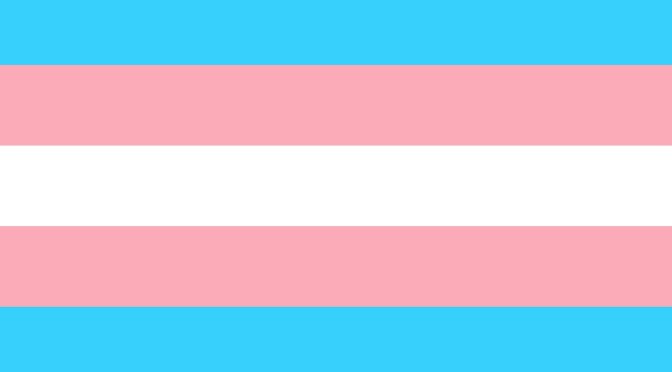
Picture: Trans flag. Picture by Kat Love from Pixabay.

Nicodemus

The reading for this Sunday is about Nicodemus– and yet it is also very tempting to preach on the last two verses!  However, I am going to resist and look at Nicodemus.

Nicodemus was an influential religious man, he belonged to the Sanhedrin, which met every day in Jerusalem.  And yet he appeared not to understand metaphor!  Or chose not to.  The word translated “from above” can also be translated “again” – an interesting aside is when Christians ask if you have been born again, do they mean from above?

The imagery of being born again was common at the time in both Jewish and Gentile culture – it was used for Jewish converts (two sources I have disagree about this!) and for various mystery religions.

It perhaps becomes obvious which Jesus meant when he goes on to talk about being born of the spirit (the aside about the wind would have come about because in both Hebrew and Greek the word for wind and spirit is the same), and the similarity of the two is that they are both only visible by the impact that they have.

So, to paraphrase, Nicodemus goes to see Jesus at night (never a good sign in John’s Gospel which frequently compares light and dark, day and night) and says that “we” recognise your signs as coming from God – but when Jesus tells him that he must be born from above, to be born of the spirit, he wavers.

Of course it is also possible that he was fully aware of what Jesus was saying to him, but was unwilling to take the steps required and was replying in kind – a kind of verbal tennis.

The question then becomes “what about us?”.  Are we willing to be born from above – to change our lives?

There are long arguments in Christianity about which beliefs are “orthodox” – leading to excommunication for those who do not conform – but in this passage Jesus appears to more interested in “orthopraxy” – right practice.  At least with this we can try to do the right thing.  I know of no way to force myself to change my mind if I don’t believe something, but I can make myself do things.

So – the last two verses!  I couldn’t resist.

John 3:16 is perhaps the most quoted verse in the Bible – it used to make a regular appearance in the crowd at sporting events, but how was it being used?  To me it felt as though it was being used to mean: “For God so loved the world that he gave his only Son, so that everyone who does not believes in him may not perish but may not have eternal life”.  And yet the following verse suggests to me that this is far from God trying to catch people out, but trying to help us.

Now surely that is a God worth believing in – and a God worth responding to.