Category Archives: Lent

What is the Centre for?

Guildford Diocese are currently undertaking a review of what Church House should do.  This post isn’t a comment on that, but was sparked by another thing that I saw Gloucester Diocese had done.

As I understand it Gloucester Diocese was the involved at the beginning of Open the Book, the Parish Giving Scheme, and I have recently found Treasurer resources they make available and Vacancy advice (other dioceses do this too).

The National Church have also just made available free online resources for Occasional Offices.

In an age of online systems, and greater and greater administrative demands on parishes I think that development of such systems to help manage that increased administrative burden is one thing that the centre can do, which would help parishes.

As you can see, this isn’t a plea for Dioceses to create something, as there is no point each diocese creating their own, but if they would “encourage” the national church to do this it would help significantly!

More Tea Vicar?

Justin Welby has suggested that parishes should

host informal café-style meetings over the weekend of 30th March to bring together people of all standpoints and encourage open discussion

https://www.churchofengland.org/more/media-centre/news/churches-hold-brexit-tea-and-prayer-drop-ins

I applaud the sentiment, but when I see the problems John Bercow has getting people to react politely to each other I am not sure that I have the skills to keep such a gathering peaceful.

I can’t help feeling that such a public invitation would be attended by the kinds of people (both for and against) who are currently demonstrating outside the Houses of Parliament.

I could conceive of hosting such a discussion for people who already knew and respected each other – but then isn’t the point to reconcile those who don’t?

Am I being too pessimistic, or has Brexit turned us into a less tolerant nation?

What is Failure (Pt 2)

Yesterday I looked at failing in Lenten discipline from one angle, and I purposely chose that one first, as today I am going to look from another angle which gives permission to fail!

Quoting again from Joan Chittister’s commentary on the Rule of Benedict (or here online) she writes:

It is so easy to tell ourselves that we overlooked the needs of others because we were attending to the needs of God. It is so easy to go to church instead of going to a friend whose depression depresses us. It is so easy to want silence rather than the demands of the children. It is so much easier to read a book about religion than it is to listen to a husband talk about his job or a wife talk about her loneliness. It is so much easier to practice the privatised religion of prayers and penances than it is to make fools out of ourselves for the Christian religion of globalism and peace.

Sometimes we need to give the time that we have set aside for God in our way to what God wants us to do with it in his way!  The difficulty is telling which is which – not holding to our Lenten discipline because we fancy doing something practical is not the same as feeling called to do something practical, which prevents us holding to our Lenten discipline.

What is Failure?

If you have been following me during Lent you will know that I have not blogged for a few days – breaking my intention to do so.  So I have failed – the question is, what am I going to do about it?

In Joan Chittister’s commentary on the Rule of Benedict (or here online) she writes:

A contemporary collection of monastic tales includes the story of the visitor who asks of the monk: “What do you do in the monastery?” And the monastic replies: “Well, we fall and we get up and we fall and we get up and we fall and we get up.” Where continual falling and getting up is not honoured, where the senpectae–the wise ones who have gone before us–are not present to help us through, life runs the terrible risk of drying up and blowing away before it is half lived.

Rowan Williams has also written that if we do not fail at our Lenten discipline we may come to believe that we achieved it, and can achieve others things, through our own abilities, rather than relying on God.

So today, I get back on the horse and start again.

The question I am left with, is falling failure, or is failure not starting afresh following a fall?

What Kind of Clergy do we want – Part 2

This is the blog post that I set out to write yesterday – but I ended up following a different path!

Brian McLaren has written a book, Naked Spirituality, which summarises/simplifies a lot of the work on Stages of Faith.  Summaries of McLaren’s work can be found here and here (be patient – the first few slides are pictures, but the words come).

Richard Rohr has written and blogged about the two halves of life.

I would roughly map these to Simplicity/Complexity and Harmony in the McLaren model.  Rohr thinks that there needs to be some kind of crisis to move between the two, and I would map that to Perplexity.

So, which stage do we wish our clergy to be in?  The first of the McLaren links above suggests that if we wish to grow in our faith we require leaders who are further along the path, but also that we can find that threatening.

Both models suggest that people are at their most “productive” in Complexity/First half of life.

There appears to be a dilemma here.  If we wish our clergy to “make things happen”, which seems to be the current vogue, then we need them to be in the first half of life.  If we wish them to lead us through the stages of faith then we need them to be in Harmony (it is really difficult leading a church if you are in Perplexity!).

So, what kind of clergy do we want?

What kind of clergy do we want?

In case you haven’t noticed, clergy come in all shapes and sizes!  And that is as it should be:

And God has appointed in the church first apostles, second prophets, third teachers; then deeds of power, then gifts of healing, forms of assistance, forms of leadership, various kinds of tongues.

1 Corinthians 12:28 – Whole Chapter

God calls all sorts of people to be clergy – and why not?  No two clergy roles are exactly the same, why should we expect the same kind of people to be capable of so many different roles?

The nature of the role has changed too over the years; I think it is fair to say that Britain can no longer be considered a “Christian Country”; yes, there is a christian heritage which has set the ethos of the country, but this is changing.  While there used to be an assumption that everyone in the parish was christian, for example anyone who lives in the parish can be married in the parish church* and buried in the churchyard, this is no longer the case.  The role has also changed as society has changed, since 2000 the following are legal requirements that parishes have to comply with, some with onerous administration requirements eg: CRB, DBS, GDPR, Data Protection, Charity Law, Safeguarding and Inclusion, Risk Assessments.  Some parishes are lucky and have lay people who can manage these, while in others the clergy have to get more involved.

So, what kind of people do you want to be clergy?

* – terms and conditions apply, unfortunately

Self Control

It is a truism that the only thing you can control is yourself, and yet how often are our prayers for God to control someone else?  Reading this again today, it points out that it is through the pains and disappointments of life that we grow, rather than the joys.  At those times we see (if we allow ourselves to) the impact of our character on us, and have the opportunity to change it.

This is not self control in the sense of not eating the extra piece of chocolate, but instead in the sense of recognising our hang ups and finding ways to deal with them.

Far more difficult than not eating a piece of chocolate, but more in keeping with the spirit of Lent.  However, far harder to do as it requires us to experience pain or disappointment, something that most of us try to steer clear of, and something that we can’t always find to order.  However for many of us there may be past pains/disappointments that we haven’t yet processed, and which would form a good topic for Lenten reflection.

Makeovers Second Thoughts

Yesterday I posted my thoughts on makeovers.  Whilst I still stand by what I wrote then, today I want to add to it, because I think there is something about motivation that is worth exploring.

The Bishop of Gloucester started a campaign in 2016 called Liedentity which was looking at the impact pressures on body image were having on young people.

As a society we seem to becoming more concerned with image.  Not helped by the use of Photoshop.  If the purpose of a makeover is to “compete” with this then at one level I would want to say that it is unhealthy.  If we recognise that our identity comes from God, like Justin Welby, then striving to make ourselves something else isn’t helpful.  However, it is a tough ask to require people not to do things which will make it easier to find employment, or get paid more, or make them feel more confident.

The danger, perhaps, is if after all the effort it fails to have the desired impact.

Do looks Matter?

Strange things happen to vicars!  Today I got a call from a TV production company asking whether I would publicise their search for people to take part in a makeover TV programme (flyer above).  There have also been other times I have had similar requests from TV companies. I agreed to do so, and don’t regret it, but it did set me wondering about the current desire for makeovers.

With most questions of ethics there is a line somewhere that should not be crossed, but where does this lie when it comes to self presentation?  Or is there no line?

Might it be a question of taste, or might it be about intent?

When I started writing this blog I thought that there was a line, but as I write it I am finding it very difficult to draw it.

Take plastic surgery; my initial reaction was that there is a difference between someone who needs it because they have been badly burnt, and someone who wants to look prettier.  But now that seems like prejudice; why shouldn’t someone choose to look prettier?  I am finding it difficult to find a rule which differentiates one case from the other.  This is possibly because the only difference I can see between them is one of degree.

There are perhaps other arguments concerning the use of resources, but I suspect that most people would agree that there are some people who should receive this – so where is that line?

As part of my Lent discipline I am reading The Way to Love, and the passage I read today challenged me to see people, because only if I see the real person can I love them; if I do not see the real person then what I am loving is what I get from them, and when I stop getting whatever it is I will stop loving them.

Perhaps our attitude to makeovers is also about how well we see the person.

Inspiring vision and pathways to prayer

Lent is as much a time for taking up new habits as it is for giving up old ones, and one of the habits we are encouraged to develop is that of prayer.

Sometimes we need new ways into prayer and one such is being offered this Lent at St John’s on a Wednesday evening from 7.30pm – using the visual arts to provide inspiration and pathways to prayer.

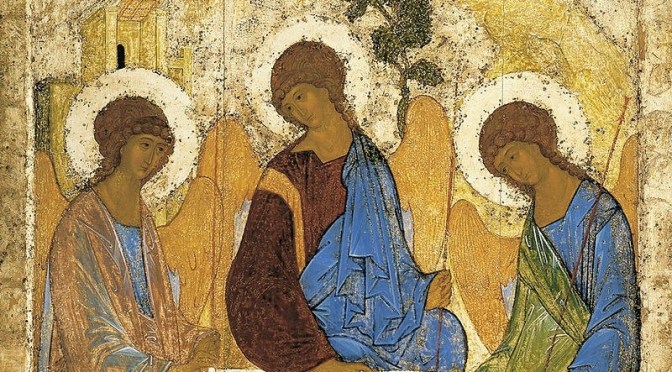
The first was Wednesday this week, when a small group considered ‘Prayer and the Trinity’, meditating on the painting Holy Trinity by Rublev, reading a passage from Paul’s letter to the Colossians (chapter 1, vs 3-14) and considering the creator, saviour and inspirer – Father, Son and Holy Spirit.

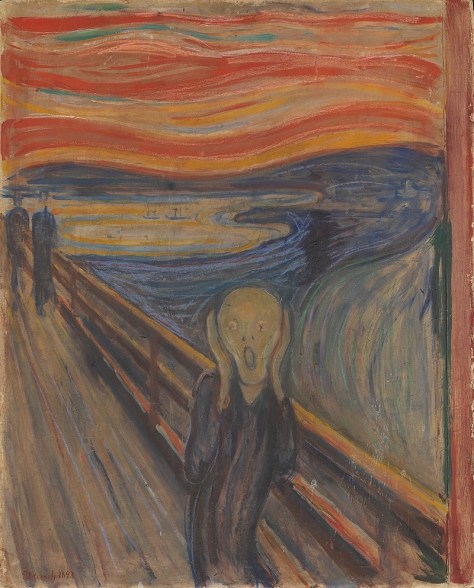
Next Wednesday, we will look at Prayer in Challenging Times and the painting The Scream by Edvard Munch, and in subsequent weeks Prayer and Discipleship, and Caravaggio’s The Call of Levi; The Joy and Excitement of Prayer with The Visitation (Mary and Elizabeth) from the Church of the Sitio, Suchitoto, El Salvador; and finally Repentance and Forgiveness with Rembrandt’s The Prodigal Son.

Come and join us and find new ways in to prayer through art.

the scream

Pictured above: The Scream by Munch

Pictured top: Holy Trinity by Rublev