All posts by Administrator

Church in a new form

Today – Sunday, March 22 – we will not be able to go to church, or at least not physically. But the coronavirus forcing the suspension of normal worship does not mean there will be no church – far from it. You can enjoy church from the comfort of your own home online. Some are livestreaming and others have recorded services or sermons.

Here in Badshot Lea and Hale, Margaret Emberson will be livestreaming on Facebook at 10am, playing and singing the hymns that should be being sung at St George’s. Find her here.

The Archbishop of Canterbury will lead first national virtual Church of England service, streaming at 8am on local BBC radio stations and online at 9am. The service, including prayers, hymns and a short sermon, will be broadcast online by the Church of England and broadcast on 39 local BBC radio stations and BBC Radio 4’s Sunday Worship. It will be on the Church of England’s national website.

Bishop Jo, Bishop of Dorking, has recorded a Mothering Sunday message based on the Gospel reading, John 19.25b-27, in which Jesus on the cross asks the disciple whom he loved to take his mother into his home. You can hear and watch her here.

Michael Hopkins, URC minister at The Spire Church in Farnham, Clerk of General Assembly of the United Reformed Church, and a great friend of the parish, has recorded a service for Mothering Sunday which you can access here.

New Inclusive Church, based in Birmingham, will be live online at 4pm with interactive discussions to follow via Zoom. Join them here.

Finally, churches of all major denominations are marking a national day of prayer and action today, particularly remembering those who are sick or anxious and all involved in health and emergency services.  Everyone is invited to light a candle in their window at 7p.m. on Sunday “as a visible symbol of the light of life, Jesus Christ”. A short act of worship ‘The Light Shines in the Darkness’ is available here courtesy of Fr Craig Huxley-Jones.


Lamentation for a time of Crisis

Richard Rohr is one of my (Stella’s) favourite theologians so you will find him appearing here regularly, particularly because he has some pertinent ideas about how to cope at this difficult time. Here are today’s thoughts from the Centre for Action and Contemplation. Do sign up so that they can be delivered straight to your inbox.

Intelligently responding to the coronavirus demands that we access resources of physical, emotional and spiritual resilience. One practice Christianity has developed to nurture resilience is lamentation. Prayers of lamentation arise in us when we sit and speak out to God and one another—stunned, sad, and silenced by the tragedy and absurdity of human events. . . Without this we do not suffer the necessary pain of this world, the necessary sadness of being human.

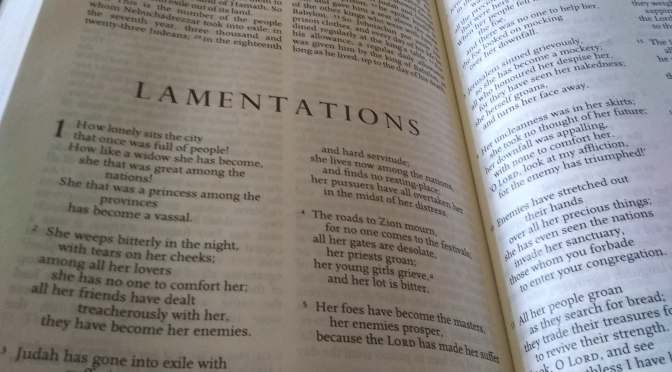
Walter Brueggemann, my favorite Scripture teacher, points out that even though about one third of the Psalms are psalms of ‘lament,,  these have been the least used by Catholic and Protestant liturgies. We think they make us appear weak, helpless, and vulnerable, or show a lack of faith. So we quickly resort to praise and thanksgiving. We forget that Jesus called weeping a ‘blessed’ state (Matthew 5:5) and that only one book of the Bible is named after an emotion: Jeremiah’s book of ‘Lamentation’.

In today’s practice, Reverend Aaron Graham reflects on the elements found in prayers of lament. I hope that you will find in his words and in the text of Psalm 22 a way to voice your own complaints, requests, and trust in God, who is always waiting to hear. We need to be reminded that our cries are not too much for God. [God] laments with us. In fact, [God] wants us to come to the [Divine Presence] in our anger, in our fear, in our loneliness, in our hurt, and in our confusion. Each lamenting Psalm has a structure;

  • They begin with a complaint. . . that things are not as they should be.
  • They turn to a request. God, do something! Rescue me! Heal me! Restore me! Show mercy!
  • Laments end with an expression of trust. Laments end with the reminder that God is setting things right, even though it often seems so slow. It is right for our laments to turn towards a reminder that God is in control and about the business of righting all things made wrong. [1]

Consider praying these words found in Psalm 22, or choose another passage of lament. Before you pray, ask God to speak to you. . .

My God, my God, why have you forsaken me?
Why are you so far from saving me, from the words of my groaning? O my God, I cry by day, but you do not answer,
and by night, but I find no rest.
Yet you are holy,
enthroned on the praises of Israel.
In you our fathers trusted;
they trusted, and you delivered them.
To you they cried and were rescued;
in you they trusted and were not put to shame.
(Psalm 22:1-5).

Self-isolating? Some ideas to fill the time

If, like me, you are stuck indoors self-isolating, you may be wondering what you can do to keep yourself as healthy as possible mentally as well as physically. After a while binge-watching Netflix, or playing endless games of online Scrabble (other word games are available) loses its appeal, and you probably shouldn’t allow the children to spend 16 hours a day on their phones/
computers/PlayStations/all three at the same time.

Fortunately there are lots of good ideas out there to help you fill the time and we have started compiling them so that we can share them and help preserve our collective sanity.

Keep the faith

For a start (this is a church blog after all) there are lots of spiritual resources and we are adding to our Faith Online page regularly. We also have a great forum with a mix of spiritual and other resources. Sign up here, then read, listen, watch, and discuss!

Get into the garden

If you have a garden and feel well enough to get out into it when it isn’t raining, gardening is a great way to clear the mind and focus on something other than the current situation. It is also intrinsically positive. You are preparing for the future, planting for a better time ahead. I’ve not yet got the energy to do much but next week maybe… You can order plants and seeds online or ask someone who is out and about to look for some for you. If you need someone to go to a garden centre for you, email me here and I’ll ask someone.

In the meantime I found this article which I thought might be helpful. It’s American but works this side of the Atlantic. Go on – Dig for Victory!

Singing is good for the soul

You probably heard about the singing from the balconies in Italy and Spain. We don’t have as many balconies here but there is still singing. Vic Cracknell, a man who has done more than most to encourage live music in Farnham, has started live streaming music on Facebook. He does a mix of genres and today I heard him performing Elton John, Carole King, Vera Lynn, The Beach Boys, and some of his own compositions. Find him here.

I’ll add some more links to others as I come across them.

Watch a West End Show

Yes, really!

The producers of the West End production of The Wind in the Willows are streaming the show online for free, though ask for a small donation that will be given to theatre charities. Watch and enjoy here.

It’s story time

Remember Little House on the Prairie on the TV? It was based on the books by Laura Ingalls Wilder and tells of the childhood of Laura herself in pioneer America in the late 19th century. If you haven’t read the books, now could be the time. Listen to Ruby2kids reading the first of the series Little House in the Big Woods. She’s reading a chapter a day and it is a delight whatever your age! Find her on YouTube here.

Laura Ingalls Wilder appears on a list compiled by Enchanted Hour Reading. It comprises books to help children make sense of their current circumstances. What is it like to live alone or within one family/ small friendship group while isolated from the world? These are books to enjoy together and some to read alone.

Get the colours out

Colouring is good for your mental health and very satisfying. Jules Middleton has some lovely colouring sheets here which will absorb you for hours. Be soothed.

That’s it for now. More coming soon.

Stella


And thanks to Sergey Shmidt on Unsplash for the lovely picture.

Love alone overcomes fear

Richard Rohr, author, spiritual writer and Franciscan friar based in Albuquerque, New Mexico, has a regular blog which many people follow. You can find out more and sign up here.

This is his message today:

It is shocking to think how much the world has changed in such a brief time. Each of us has had our lives and communities disrupted. Of course, I am here in this with you. I feel that I’m in no position to tell you how to feel or how to think, but there are a few things that come to mind I will share.

A few days ago I was encouraged by the Franciscans and by the leadership team here at the CAC to self-quarantine, so I’ve been in my little hermitage now for three or four days. I’ve had years of practice, literally, how to do what we are calling “social distancing.” I have a nice, large yard behind me where there are four huge, beautiful cottonwood trees, and so I walk my dog Opie every few hours.

Right now I’m trying to take in psychologically, spiritually, and personally, what is God trying to say? When I use that phrase, I’m not saying that God causes suffering to teach us good things. But God does use everything, and if God wanted us to experience global solidarity, I can’t think of a better way. We all have access to this suffering, and it bypasses race, gender, religion, and nation.

We are in the midst of a highly teachable moment. There’s no doubt that this period will be referred to for the rest of our lifetimes. We have a chance to go deep, and to go broad. Globally, we’re in this together. Depth is being forced on us by great suffering, which as I like to say, always leads to great love.

But for God to reach us, we have to allow suffering to wound us. Now is no time for an academic solidarity with the world. Real solidarity needs to be felt and suffered. That’s the real meaning of the word “suffer” – to allow someone else’s pain to influence us in a real way. We need to move beyond our own personal feelings and take in the whole. This, I must say, is one of the gifts of television: we can turn it on and see how people in countries other than our own are hurting. What is going to happen to those living in isolated places or for those who don’t have health care? Imagine the fragility of the most marginalized, of people in prisons, the homeless, or even the people performing necessary services, such as ambulance drivers, nurses, and doctors, risking their lives to keep society together? Our feelings of urgency and devastation are not exaggeration: they are responding to the real human situation. We’re not pushing the panic button; we are the panic button. And we have to allow these feelings, and invite God’s presence to hold and sustain us in a time of collective prayer and lament.

I hope this experience will force our attention outwards to the suffering of the most vulnerable. Love always means going beyond yourself to otherness. It takes two. There has to be the lover and the beloved. We must be stretched to an encounter with otherness, and only then do we know it’s love. This is what we call the subject-subject relationship. Love alone overcomes fear and is the true foundation that lasts (1 Corinthians 13:13).


Picture: Richard Rohn, Wikimedia Commons 


Latest news and support

Thursday, March 19th

As we continue to work out how to live under the shadow of the coronavirus pandemic, we will be offering offering ideas and resources to help each other.  Please do let us know if you can help or need help, or know someone who does. Email us here.

There are a number of resources on our Faith Online page and we have added a link specifically to support people’s mental health. More will be added.

At the end of the school day tomorrow schools close for all pupils apart from children of key workers and vulnerable children. The effects of this will be felt across all society and again we will be doing what we can to support people. Teachers and former teachers are offering to give advice and help where they can. Among those offering locally are Carolyn Weston and Rachel Wright. Carolyn, a retired teacher, is happy to give general email advice, via parents, to children who may have some work set or some homework to finish, and Rachel’s specialisms are Key Stage 3-4 Science and A-Level Chemistry. If you want to contact them, please do so via the parish admin email admin@badshotleaandhale.org and we will put you in touch.

A prayer in time of need:

Lord Jesus Christ,
you taught us to love our neighbour,
and to care for those in need
as if we were caring for you.
In this time of anxiety, give us strength
to comfort the fearful, to tend the sick,
and to assure the isolated
of our love, and your love,
for your name’s sake.
Amen.

A letter from the Bishop of Guildford

Bishop Andrew, Bishop of Guildford, has written the following letter to be shared among all parishes in the diocese:

Dear Friends,

The last few days and weeks have been a confusing and bewildering time for us all. A growing number across our communities have contracted the coronavirus, of whom a small proportion have died. A far greater number are now self-isolating, including many able-bodied men and women over the age of 70. Social gatherings have increasingly come to a halt. The economy is in freefall.

And yesterday we all received the news that church services are to be suspended for the time being, so as to seek to contain the virus: another unprecedented move at a time when the very word ‘unprecedented’ is becoming almost a cliché.

In all this there has inevitably been much talk of closures, cancellations and postponements, including the postponement of a visit of the Archbishop of Canterbury to our diocese, which was due to begin today.  Is the Church just shutting up shop, people might be wondering – to which the answer is a resounding No! For this current crisis is a time for Christians (including we clergy) to step up not to give up: to let go of what’s less important so as to focus on what’s most important: to be not just the Church of England but the Church for England; to go deeper in our commitment to what Jesus described as the greatest commandment of them all: to ‘love the Lord our God with all our heart and mind and soul and strength, and to love our neighbour as ourselves’.

So how might we love our neighbour at this time? Perhaps through committing ourselves to ten acts of kindness every day, especially in relation to those who are poorest and most disadvantaged among us: making sure that our Foodbanks remain properly stocked with provisions and volunteers; leafleting streets with offers to pray and to help; arranging for daily phone calls to those who are frail and housebound; joining in with local community initiatives (because Christians don’t have a monopoly on good ideas or compassion).

Even the self-isolating can love their neighbour at the end of a phone-line, or in front of a computer, or by writing a good old-fashioned letter. How about expressing your appreciation of your Vicar, for example, at a time when she or he is likely to be feeling really pressurised?

One of our churches has followed the Italian example in providing a little outdoor concert for those who are self-isolating in a block of flats in their parish. Another has taken round a hamper to their local GP surgery, to express their huge admiration and support of those on the frontline. Clergy will shortly be invited to join a diocesan Facebook group to share good ideas and learn from one another; and do please consult our diocesan website daily as we respond to the most pressing questions that are cropping up in our churches and our schools.

Loving our neighbour is one thing, but how about loving the Lord our God when corporate worship is on hold? What might that look like?

As you know, we’re in the season of Lent, 40 days and 40 nights in which Jesus went into self-isolation, to be tested, yes, but also to pray, to meditate on the scriptures and to deepen his sense of calling for the future. During that time he was echoing the 40 years that Israel spent in the desert before entering the Promised Land: a time in which there was no church or temple, but just a makeshift tent (the tabernacle) in which Moses used to meet with God day by day.

So how might we meet with God over this time as we take time out to pray, to meditate on the scriptures and to reflect on our calling, now and in the future? What’s our tabernacle? Again parishes around the diocese are being really creative on this one, keeping their churches open where possible, providing spiritual resources for those who need them, making use of technology to help people feel connected, and above all praying, and calling others to join in. This coming Sunday the Archbishops have called us to a Day of Prayer, symbolised by putting candles in the windows of our houses and together lighting it at 7pm. And again there are some wonderful resources appearing on the diocesan website to help spiritually nourish us during this time in the wilderness.

Loving God, loving our neighbours; and how important too, to love ourselves at this time: to be kind on ourselves as well as others, as we all adjust to a rapidly shifting landscape.

And so finally to God’s Word through the prophet Isaiah: that ‘I will give you the treasures of darkness and the riches hidden in secret places, so that you may know that I am the Lord, the God of Israel, who calls you by name’ (Isaiah 43:5). So what might be the treasures of darkness during this time?

Perhaps a new togetherness as a nation, following the deep divisions of the Brexit debate. Perhaps a new connection between the church in England and the people of England. Perhaps deeper discipleship and new vocations arising out of those forty days and forty nights of self-isolation (or however long it lasts). Perhaps a new commitment to prayer, and above all a new recognition of the sheer wonder of the Christian gospel – that nothing (not even loneliness or sickness or death itself) can separate us from the love of God in Christ Jesus.

And, in recognition that the call to suspend public worship fell on St. Patrick’s day, a prayer from St Patrick’s Breastplate:

Christ be with me, Christ within me,

Christ behind me, Christ before me,

Christ beside me, Christ to win me,

Christ to comfort and restore me,

Christ beneath me, Christ above me,

Christ in quiet, Christ in danger,

Christ in hearts of all that love me,

Christ in mouth of friend and stranger, Amen’.


Every Blessings,

Bishop Andrew

Listen or watch this message here

Coronavirus update

Alan and Lesley Crawley are both showing symptoms of coronavirus and are therefore self-isolating for 14 days. A number of others in the ministry team are having to take precautions and this will obviously have an impact on ministry and work in the parish. At the moment though everything is changing on a day-by-day basis and we will keep you up-to-date as best we can. Information will be available on the website and if you want to receive regular updates, including spiritual resources such as prayers and articles, please sign up here and click the box marked ‘Coronavirus updates etc’.

We will continue serving people in every way we can. If you are having to self-isolate, if you need help with deliveries, if you are anxious, get in touch. We also need people who are willing to pick up shopping or help people feel less isolated by keeping in touch. If you have prayer requests please also let us know. The best way to do this is to email Stella Wiseman, the administrator, or call her on 07842761919.

Services suspended but the Church is still here

Public worship in Church of England churches is being suspended in the light of the continuing coronavirus pandemic. but the church is still here and looking at ways we can continue to serve and to pray.

The Archbishops of Canterbury and York, Justin Welby and John Sentamu, have written a letter to all churches asking them to put public services on hold until further notice. But, where possible, churches will remain open as places of prayer for the community, observing social distancing recommendations.

They urged congregations to be in the forefront of providing practical care and support for the most poor and the most vulnerable during the crisis. And they also encouraged clergy to maintain the ancient pattern of daily prayer and, where possible, the eucharist – live streaming worship if they have the resources to do so.

“Being a part of the Church of England is going to look very different in the days ahead,” they wrote. “Our life is going to be less characterised by attendance at church on Sunday, and more characterised by the prayer and service we offer each day.

“We may not be able to pray with people in the ways that we are used to, but we can certainly pray for people. And we can certainly offer practical care and support.

“Please do carry on supporting the local foodbank and buy extra provisions for it.  Ensure the night shelters wherever possible are kept open. There are many very encouraging schemes happening right across our country in communities to focus on caring for the most vulnerable and do continue to play your part in those.

“Then by our service, and by our love,  Jesus Christ will be made known, and the hope of the gospel – a hope that can counter fear and isolation – will spread across our land.”

They added: “This is a defining moment for the Church of England. Are we truly are a church for all, or just the church for ourselves.

“We urge you sisters and brothers to become a different sort of church in these coming months: hopeful and rooted in the offering of prayer and praise and overflowing in service to the world.”

The archbishops have joined other church leaders in calling for a day of prayer and action this Sunday (Mothering Sunday) particularly remembering those who are sick or anxious and all involved in health and emergency services.

Further information on what the suspension of public worship will mean will be available as soon as possible on the Church of England website. This page will be regularly updated.

The Church will be providing a range of resources to enable people to continue to walk with God at this difficult time. This includes #LiveLent daily reflectionsprayer for the day audio and text and Alexa and Google Home smart speaker apps.

In the days and weeks ahead, the Church will be significantly expanding this output with audio of a simple daytime prayer and night prayer service, more video content and some live-streaming, new mental health reflections to support people, and webinars to help churches stream sermons, events and make the most of social media. Read more here.

The aim will be to make as much as possible available in simple downloadable and printable formats for those who can’t easily access the technology.


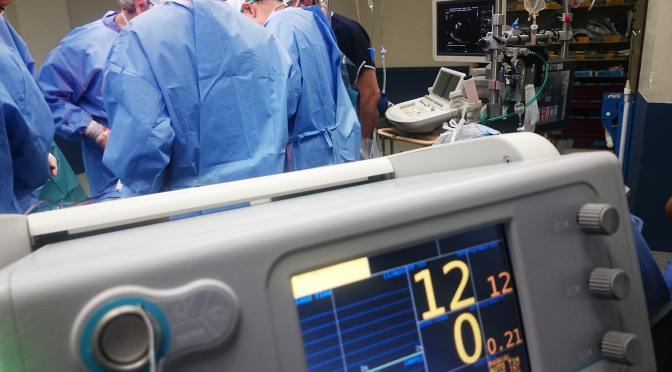
Picture by Tony Mclachlan on Unsplash.


Coronavirus and the church

It has been a distressing start to the year. We are facing a pandemic and what does that even mean? What impact is it going to have on our lives? Is one of our loved ones going to die? Are we going to die? What do we do? Do we cancel things? Do we stay at home? Will we get cabin fever? How do we keep each other safe?

It is interesting how each of us thinks differently about this pandemic. Some people have looked to the past – we didn’t hoard for SARS or Bird Flu, why do we need to do so now? Some people have looked at the present – it is only 5000 people in the UK who have this out of a population of nearly 70million, what is the problem? Some have looked to the future – if the number of cases are doubling every two days, then in a month everyone in the UK will have it.

Our personalities are different, and how we evaluate truth and who we look to as authorities also differ. Some of us we grew up in households where we were the ones who had the role of keeping a level head and not panicking – we tend to downplay everything. Some of us grew up in houses where we didn’t feel safe and this threat keys into that, we might be worriers. Some of us look to older, wiser people as authorities, others look to scientists, others to our friends or family.

Over the weeks, some things have become clearer. We can’t contain this virus – we are just trying to delay it so that the hospitals are not overloaded. A lot of us will therefore get sick – probably 60-70% of the population. This might be so slight that we don’t notice or we might be very sick indeed. If we are older or have a chronic condition then we are more likely to die – very sobering if you find yourself in that category, as I do. We also know this virus is going to be part of our lives for months – probably a year.

It has made me wonder how do we do church in these times. Already we are changing things. We are no longer sharing the peace, and yet we need peace and unity as Christians. Jesus was a healer – he touched people, even the untouchable, even those with the feared and highly contagious disease of leprosy. For some, the act of hugging each other on a Sunday is a form of healing, compassion and love. We are no longer sharing the common cup – the greatest symbol of unity that we have, we are no longer passing round the common collection plate, the symbol of us holding our money and resources in common. We are offering less hospitality in the form of coffee and tea – our symbols of God’s grace that he pours out on us and we in turn pour out to the world. Also, if there are only 50% of us there on a Sunday then how do we do Communion?

The answer is we will find a way. We will find safe ways of being hospitable, we will find ways of showing love and compassion and unity. Some ideas so far are that we will ask people to tell us if they are self-isolating and we can then ring them up and chat. We can get a buddy system going. Some of us can use technology to continue to grow in our faith and link up with others to discuss books that we are reading, or we can use prayer sites such as these:

https://pray-as-you-go.org/

https://www.24-7prayer.com/dailydevotional

https://www.churchofengland.org/prayer-and-worship/join-us-daily-prayer/todays-prayer

https://www.sacredspace.ie/

https://www.bbc.co.uk/programmes/b006qnds

https://www.bbc.co.uk/programmes/b006wzfs

Alan and I have lots of good books on faith that can be borrowed and we will put more articles in the magazine and more items on the blog – https://badshotleaandhale.org/blog/

Of course, we will be following government advice about delaying the spread of the virus and ensure our services and events are compliant with this.

A more difficult thing to think and talk about is the chilling message Boris Johnson gave us; “Many more families are going to lose loved ones before their time.” If 60% of us get this illness and the death rate comes down to 1% then that is about 40,000 people will be killed by the virus over the next year in the UK. Of course, no one at this point knows the fatality rate or the percentage of the population who will be affected, these are just best guesses. To put the numbers in context, about 500,000 people die each year in the UK and so if the numbers are correct, it is an 8% increase. We are very poor about talking about death – it is the ultimate taboo, but perhaps we need to get better about thinking and talking about it, after all it will happen to all of us eventually – with or without the pandemic – and cancer and heart disease are much more of a threat than the coronavirus for most of us.

Finally, there is the old question “Why would a God of love allow something horrible like this to happen?” The reality is that life is not easy for anyone: relationships break down, people get sick, people lose their jobs, loved ones die, not one of us gets through life unscathed. For us to be resilient, we must accept this reality. We might not like it or understand it, but we must accept it, as it is certainly true. I believe it is part of creation; the chaos and uncertainty allow the evolution of life and gives us freewill. If volcanoes had never erupted then beautiful landmasses like Hawaii would not have been created. Changes in cells may cause bad things like cancer, but they also created us in all our uniqueness. As humans have the capacity to be loving but also not loving, hurting others, and without that we would be robots.

Jesus never promised us an easy life – and it is writ large with him dying on the cross. Instead, we are promised life in all its fullness – a rich life where we have meaning and purpose, where we achieve good things as we seek the Kingdom of God, where we form loving relationships with others. In these uncertain times let us hold onto this calling and allow love and compassion to guide us.

Lesley


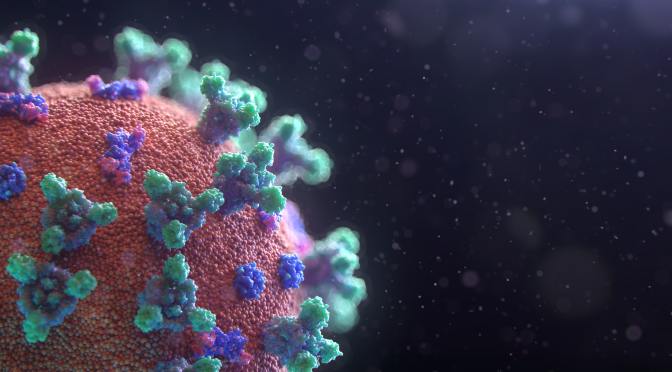
Picture: New visualisation of Covid-19 by Fusion Medical  Animation on Unsplash.

‘Let us remember that we are in this together’: advice from the Archbishop of Canterbury

The Archbishop of Canterbury has written the following piece with advice on how to approach the coronavirus pandemic:

“As we continue responding to coronavirus, a lot of us are wondering how we can walk in faith, resist fear, and support those who are most vulnerable.

The first thing to say is that following the advice of experts – especially about washing our hands regularly and self-isolating if we have cold or flu symptoms – is a really important place to start.

But what else can we do? Well, the thing about having hope, faith and courage is that although they are gifts from God, we can do our bit to nurture them.

We can take some time to sit quietly and pray, letting God know about those things that are on our hearts and minds. When we do that, we make that connection with God that nourishes and sustains us.

We can pray for those who are physically vulnerable. Those who are financially insecure and worried about needing to take time off work. Those who live in countries without public healthcare systems. Those who do not have family or friends and are facing this situation alone.

We can pray for healthcare workers and political leaders who are responding to this crisis and bearing the incredible responsibility of trying to keep us safe.

That brings us to resisting fear. One way to avoid being overwhelmed by fear is turning our attention to helping someone. Is there a person in your life, or your community, that you could call on the phone and see if they’re okay? Maybe it was someone that you prayed for?

Perhaps they can’t get to the shops – could you pick up some groceries for them? Perhaps they are self-isolating and feeling lonely – could you call them on the phone and see how they are?

If you have some spare income, or some spare food, could you donate to your local food bank?

Let’s remember that we are in this together. Let’s look after ourselves and our communities, gain courage from each other, and walk together in hope and faith.

As it says in Psalm 46: ‘God is our refuge and strength, an ever-present help in trouble.'”


Coronavirus picture by Vektor Kunst from Pixabay